
By Ahmed Hagar, Writer Many faculty members and higher-education administrators believe that design is the solution to addressing difficult problems. As society grows ever more complex, design thinking provides a way of putting humans first while tackling thorny issues. Thus,…
The Many Dimensions of Space
By Cynthia Zheng, Writer
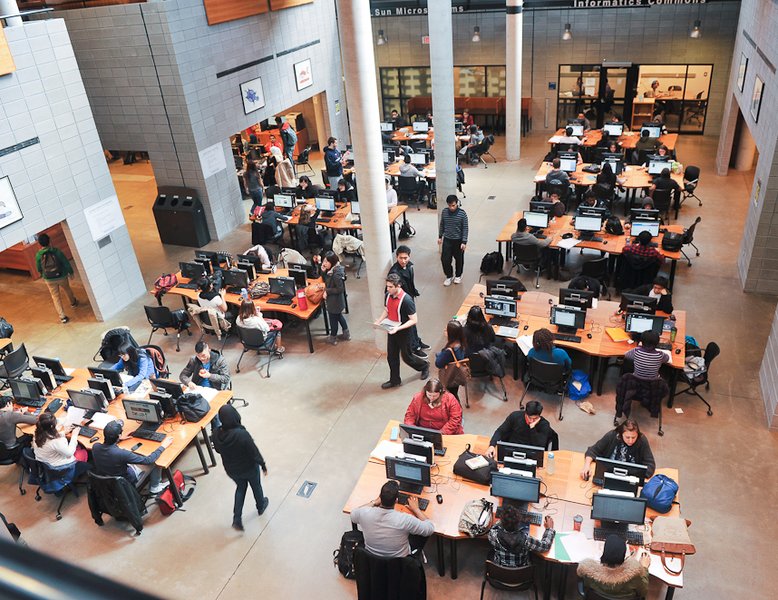
What does space mean to you? According to Dictionary.com, it’s a noun: the “expanse [where] material objects are located and […] events occur.” But it’s more than that sterile definition—it’s what constantly surrounds us, what we inhabit, and thus part of our mental and physical experience.
The Innovation Hub has conducted many projects examining the experience of space. Examples include Transforming the Instructional Landscape, Chill Spots, and the New College Dining Hall and Clara Benson Pool Gallery redesigns. Through this work, we’ve seen how the physical environment impacts us.
Welcoming Our Anthropology Interns
Tammy Cheng, Writer, contributed to this post.
We learn by experience, as Innovation Hub members know. Since the Hub launched 3.5 years ago, many students have practised their design thinking, empathetic interviewing, data analysis, and professional skills through our projects. Recently, we’ve formalized this learning experience by partnering with academic courses. We provide practical projects for students to work on, and UofT’s excellent faculty and course instructors provide their subject expertise. Together, we provide a richer learning environment for students.
Designing Better Empathy

By Max Yaghchi, Writer
Can empathy be learned?
This question is central to the Innovation Hub’s methods. We use design thinking to take “a human-centred approach to solving problems,” and since the rise of empathic design in the late 1990s, designing for humans first has meant empathy.1
Towards a Culture of Caring: The Final Report of the Presidential and Provostial Task Force on Student Mental Health


After our work last semester with the Presidential and Provostial Task Force on Student Mental Health, we are thrilled to see their recently released Final Report and the accompanying Administrative Response. As readers may remember, our Mental Health team led eleven feedback sessions for the Task Force. Our six initial events invited students to discuss their mental health experiences and informed the draft themes. A further five events collected feedback on those themes.
The Evolution of the Design Thinking Experience Program: Winter 2020
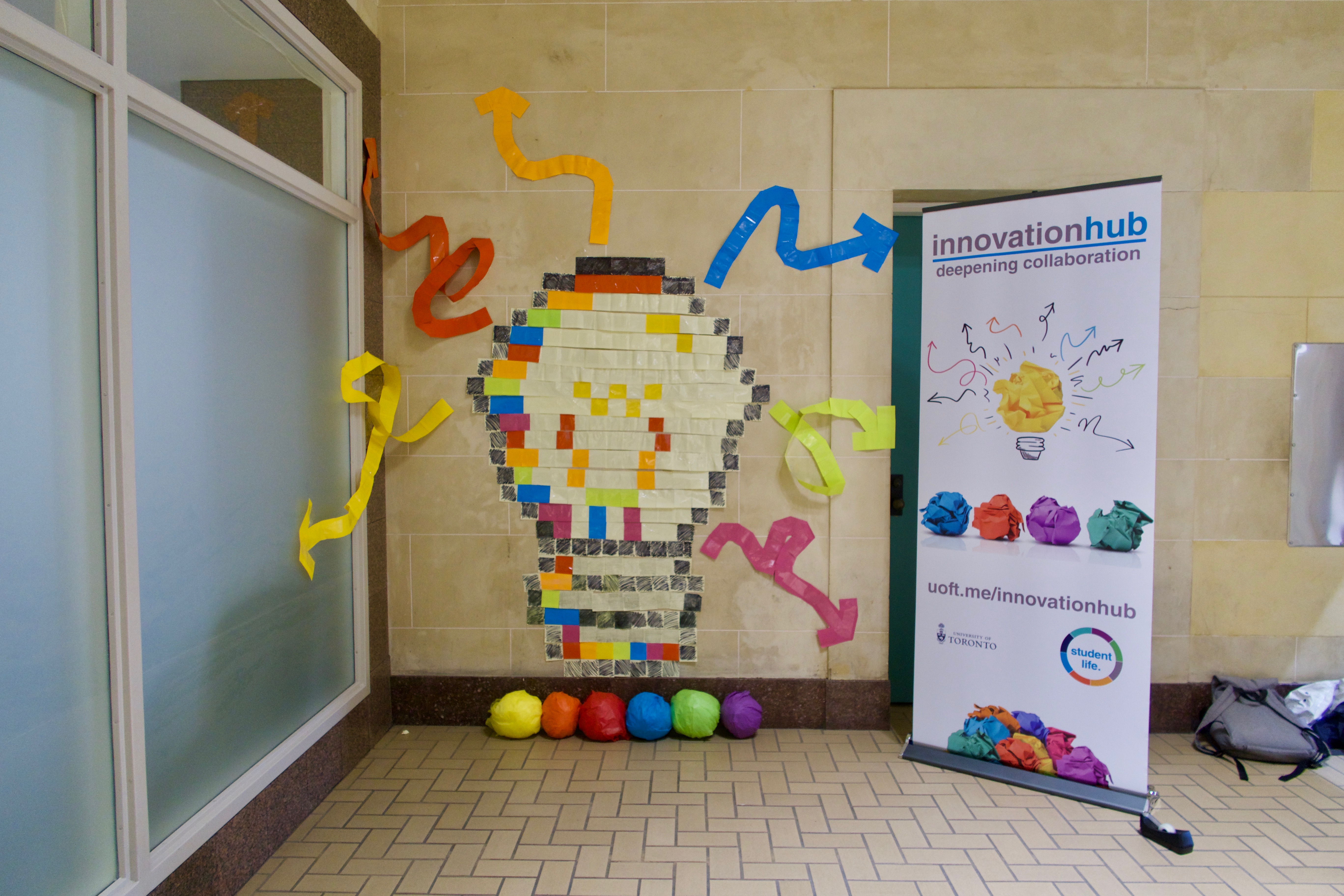
On Thursday, January 9, the Innovation Hub launched the third edition of our Design Thinking Experience Program (DTEP). As in our February and September 2019 programs, we are working with participants to understand and solve challenges at UofT using human-centred design thinking and empathy-based approaches. This time, in addition, we’re thrilled to welcome staff members back to our design teams.
Lessons in Listening

By Anusha Arif, Writer
To design for students, we need to understand the student experience. Thus, the Innovation Hub prioritizes learning to listen—interviewing empathically and attuning ourselves to the world revealed through participants’ words. Though ‘listening’ is a basic skill, listening deeply is another art, and learning is an important part of the process. Some Innovation Hub members come with experience from anthropological, sociological, or other human-centred research, but many others are new to empathic interviewing. How does this learning process go for them? What do they find challenging and interesting?
Little Papers, Big Ideas
By Darren Clift, Writer
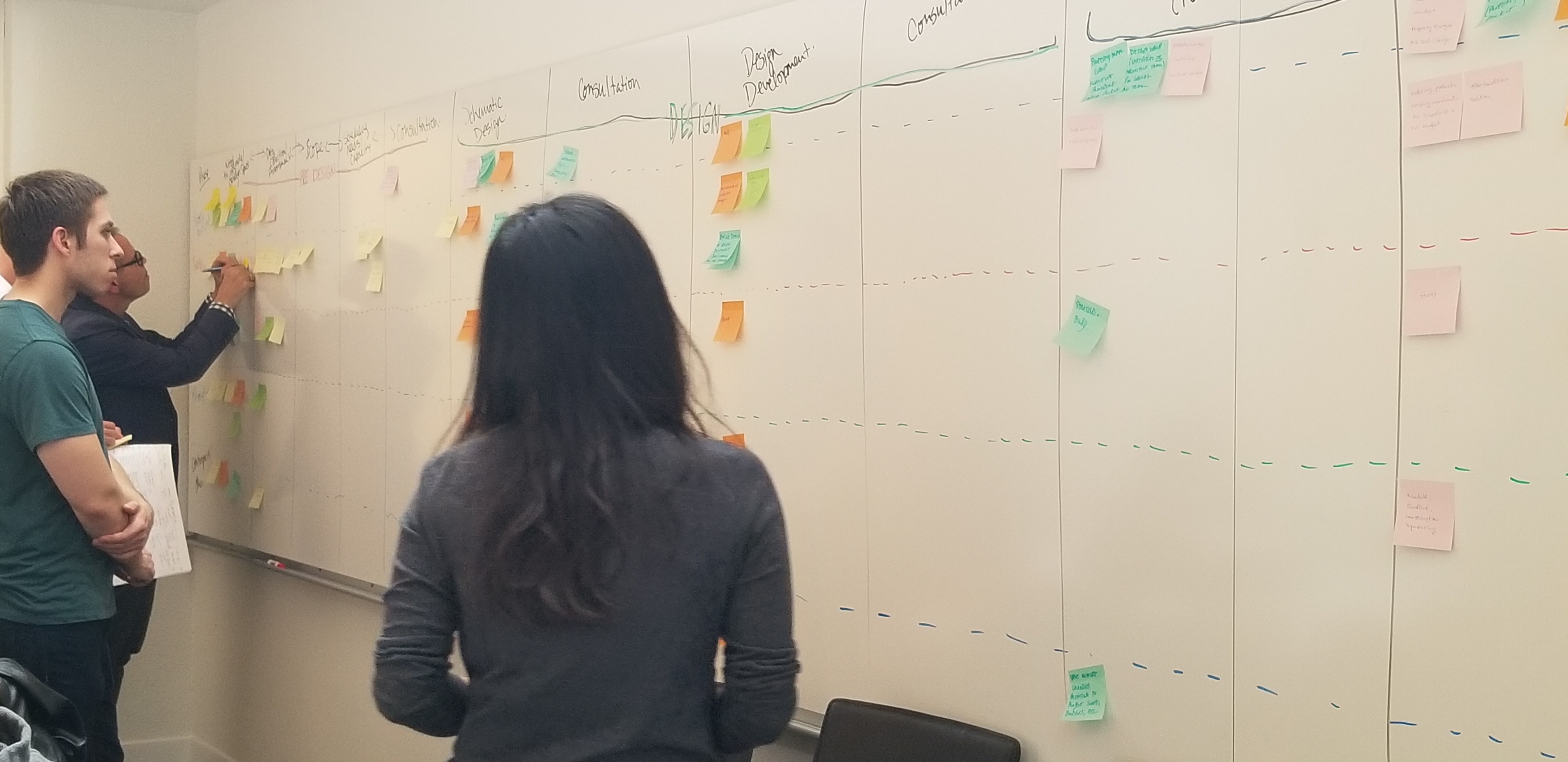
Playing with sticky notes isn’t just for kindergarten classrooms. For universities and colleges who practise design thinking, these little pieces of paper serve as creative tools, and a wall covered in rainbow-coloured sticky notes can lead to big ideas. The Innovation Hub’s Transforming the Instructional Landscape (TIL) team experienced this earlier this semester, when we collaborated with our project partners at Academic + Campus Events (ACE) in a Journey Mapping session.
View from the Inside: To Teach and Delight

For the final View from the Inside post of this semester, Sharon Lam reflects on how we share our insights at the Innovation Hub. To read more reflections from Sharon, click here.
One of the final stages of Innovation Hub projects is reporting on our findings. This may be in the form of written reports, but can also include presentations and visualisations. Depending on the project, the audience of partners and stakeholders receiving our insights differs, but in each case, we want to clearly convey our insights, so our partners can use them to ideate and prototype. We do this in the form of “Design Principles”—aspirational themes to inspire and guide our partners as they develop solutions. While reports, presentations, and design principles need to be accurate, they also need to be memorable and moving.
Alternative Reading Week: Art and Design with the Innovation Hub


For Alternative Reading Week (ARW) last month, the Innovation Hub worked for three days with a group of students interested in design thinking, discussing design thinking principles, working through collaborative data analysis, and creating art to represent the themes we uncovered.