TTC? Why man why????

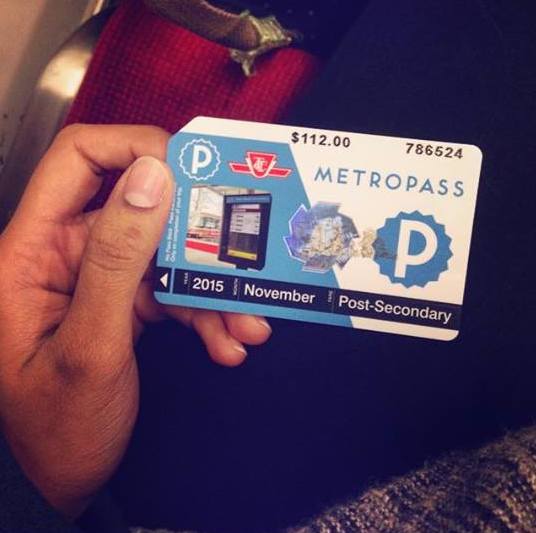
So earlier this month I (along with many of you other U of T students) dished out a whopping $106 for my monthly TTC Metropass. As I sadly saw that money drift away never to be seen again, I had a thought: “If I went to school in another city would I be paying the same amount of money as I do here in Toronto?”. I know we all love to hate on the TTC (I think they charge far too much and provide a fairly poor standard of service), but when we actually take the time to compare the TTC rates to other cities does Toronto still suck all our money from us?

Obviously as the result of the economy most cities have to increase prices from time to time. Cities such as Dallas, and Boston saw fare increases range from 15% to 23% from 2010-2012, which is pretty high if you think of it. So where does that put the TTC in comparison to other cities here at the beginning of 2013? Well even with our somewhat more stable economy , Toronto still has the highest trip index among most North American cities.

Yep We WIN!

“Now what is a Trip Index Shak, you may say!” Well I shall tell you dear random reader. It’s basically the amount of trips one needs to take in order to make up for the $106 you paid at the beginning of the month. Shockingly it takes one 48 trips in order to pay for itself, this basically evens out to having to travel there and back, from either school or work, 22 days out of the month, plus a few more times on the weekends. No other city has such a high index, not even New York’s (47). (Just check out the graph above)

Also what is with this business on transfers….. I mean what the heck is up with those things. I’ve been taking the TTC for years and years and I still am not entirely clear on how exactly I am supposed to use one. Is it useable in most places? Generally not, only in certain designated stops is one allowed to use a transfer to go from a subway to bus, or streetcar to subway, etc. I mean just look at how some of the other Canadian cities deal with transfers/stopovers. Edmonton, Calgary, and Vancouver use a 90-120 minute time allotment for stopovers in either direction on their lines. So for instance if you are running an errand you have the ability to use one fare there and back, provided that you simply don’t go over your time limit. GENIUS I SAY!

Look we can't even afford maintenance!

Toronto residents could also greatly benefit from having “downtown” fares much like Calgary does. Downtown fares in these cities provide lower rates due to the higher density population base in certain parts of the city; but of course we don’t have that either.

Seriously Toronto get your stuff together, our wallets are getting sucked dry here and our system isn’t all that great! I think I’ll give the TTC a call……. oh wait nvermind.

Those sneaky devils

- Shak

life through the doors of union station and con hall

I spent my first year at U of T, like most students commuting to school. I’d love to say commuting is cool, but it isn’t. On a scale of coolness, commuting is Charlie Sheen and living in residence/extremely close to campus is Matt Damon (even if you do live in residence, chances are at least for one of your years at U of T, you’ll be commuting from somewhere in the city). But all hope is not lost! Still, like Charlie Sheen, you can still be winning when you commute!

Submitted for approval of the Student Life society, I present to you; the story of the crazy student commuter.

My daily commute to school takes up about an hour; riding in on a GO Train from suburbia. Now, I love trains. Thomas the tank Engine, the Polar Express, Hogwarts Express; what’s not to like about them?  But I soon found myself frustrated. Going to school wasn’t the problem, maintaining my energy on the commute back home was (especially on days that I had night classes). I would go to class full of energy and board the homeward train exhausted. So, I decided I would sleep. This did not turn out so well, as I once awoke from my eternal slumber, I heard someone mumble “LAST CALL FOR THE DOORS”. I turned to face the window and to my horror, I saw my station.  I managed to tumble out of the train just before the doors closed. I would not sleep on the train again.

And so my frustration continued for about a semester. I would come back home, collapse and not be able to give my work the full attention it needed. Then I discovered the Tim Horton’s kiosk at Union Station, and I could finally achieve things on the train! So, for me, it was all about boosting that drained energy with the stuff parents drink as they watch their kids play hockey on commercials.  For you, sleeping on the train may be an option. If you find that it does recharge your batteries effectively, recharge away. Anything to get the Energizer bunny in you drumming again.

Now comes the question of what to do on the train. Now, if you are me and lack creative artistic skills, you could do the following:

My rendition of a GO Train.

  • Work on your homework and catch up on reading.
  • Do other non-school work.
  • Read your novel that isn’t Fifty Shades of Grey.
  • Listen to that 80s band none of your friends seem to understand on your iPod.
  • Watch TV episodes.
  • Look at people.
  • Look at trees.

If you are creative you could (fyi, these are totally serious suggestions):

  • Start a what-I see-on-the-train blog/tumblr (Hipsters on the train?)
  • Paint/draw avant-garde pieces of art.
  • Write a novel.
  • Make sock puppet companions and talk to them.
  • Have a tablet? Make a webcomic.
  • Create an alternate universe in your head where the train is actually the Hogwarts Express.

That being said, there will be days where commuting just sucks. You’ll get fed up by the crowding, the missed trains, the ladies who read inappropriate novels and the rude people (although the weird people provide some amusement). In this atmosphere, it’s easy to become disheartened and lose sight of your goal (which is to be awesome at U of T). I like to remind myself (highly corny) that this train is taking me on a journey to my future, and well it is.  U of T is where you will find yourself and set your course for life.

And if that doesn’t inspire you out of your commuter induced grumpiness, just remind yourself that at home, you can indulge in a big bucket of ice cream that will cause you to forget all your commuter problems. :)

Stay awesome U of T.

- Abdullah

Any questions about commuting? Frustrations? Weird stories to share? Feel free to leave  a comment.


So I got a TTC Ticket

Astounded and flustered, emotional and confused, last Friday I was given my first ever ticket, which was from the TTC. I just can’t believe it.  I share this with you so you can avoid the same experience.

Probably the most important is to a) have the TTC Student ID card, which you can get from Sherbourne station and b) carry it with you at all times. If you don’t do both, you can be issued a ticket for $235.00.

If you get stopped, don’t be intimated. I was, well, because I’m really sensitive. Keep your emotions in check, know the colour of your card and only state your truth.

If you get issued a ticket, you can fight it. Instructions will be on the back of the ticket. It’s important to get disclosure: a report of what the TTC officer wrote, so you can challenge the statement if it is untrue. Go to the provincial court, speak with the prosecutor and tell them what happened. They can reduce or eliminate the fee. If you want to challenge the charge, you’ll have to apply for a trial. That’s another can o’ worms.

I’m going to fight the charge, wish me luck!

Desiree

I Got Commuter Problems

So I was planning to start this post off with some cool Haiku about my commuting problems, or even a short poem, but nothing, nothing, will communicate how I truly feel about subwaying it, in all its delaying/security/emergency/track level issues, downtown to school. Only this will:

AAAAAHHHHHHHHHHHHHHHHHHHHHHHHHHHHHH!!!!!!!!!!!!!!!!!!!

Please, share in my pain.

I really don’t know what to say about the T-T-C. I mean, I’m dependent on it. I don’t have a car, so I need to use the subway to get everywhere, especially to school. And, it seems every time I’m on it, every time, there is always some sort of delay, issue and whatnot. Why, I ask. Fees have increased, technology has evolved. I am left in the TTC dark.

Ok, I admit, I *may* sound a bit harsh. Some of the delays are do to health emergencies of the passengers or even security issues aboard trains. But, I don’t get why the whole network has to stop to wait for the proper personnel to arrive. I just don’t get it.

Inspired by the recent U of T meme-age . . .

So, my fellow thousands of students who commute to school who use public transport, let us rally together and arm ourselves against the TTC.

1) Plan for the worst: budget some extra time for your daily commute so you won’t be late for wherever you are going. I’d say an extra 15 minutes, but then again, the TTC loves to surprise us with much longer delays. I admit I always fail to do this because, as the bulk of my commute is early in the morning, I just can’t summon the strength to get out of the bed. I love sleep. When you are stuck, break out a book or course materials so you can use that time to your advantage.
2) The TTC app: ironically, while the TTC’s own technology fails to serve its customers, it has decided to partake in technology to alert them of schedule changes, delays etc. Search your respective phone/android apps and you will find it.
3) Have a plan B, as in plan Bus: Know your bus routes. As soon as you can confirm super long delays, high tail it outta there. Major lines like Yonge have a Yonge bus. Know the times it stops at each subway stop.

Next time you are late to class, meeting a friend or work, don’t feel embarrassed to blame the “you know what.” It happens to all of us.

Desiree

http://www.ttc.ca/Routes/index.jsp  TTC Schedule for its various routes

Teleportation and other things that would make commuting easier

If you spend any time on the east side of campus, you know how beautiful it is. The east side of campus makes me feel like I’ve been transported back in time…that I’m a student of a bygone age. Everything about this side of campus is old.


There are advantages and disadvantages to the east side. The advantages are less tangible; it’s more of a vibe that permeates the place. It’s the feeling you get when you look out the leaded glass windows during class to stare at an ivy covered wall. But there are a lot of disadvantages to the east side, for example, the washrooms are miniscule, most of the classrooms lack the technological advances that the west side classrooms have, and there is an absence of parking lots.


This last one really gets me. I’m all about cycling and public transit; see my previous posts for verification. However, this year I was faced with a dilemma. I have children that I need to pick up from school daily, so my only option was to drive or teleport. Since I haven’t perfected teleportation yet, I drive every day. Before this year I always relied on public transit and my bike to get to and from school, but this year I became one of the hated drivers.

What shocked me as I planned out my schedule in August was that there is only one small (private) parking spot for the entire east side of campus (check out the parking layer on the U of T map to view the unequal distribution of parking lots on campus). This lot, located on St. Joseph St., has a flat rate of $12.25. If you happen to have only have an hour of class and need to drive, then you are forced to park on Queens Park, in one of the 10 to 15 street spaces. Out of necessity I now arrive early for class each day to stalk out a parking spot and pounce on it when the opportunity arises. It’s a huge waste of time.

Hopefully, you don’t have to drive to campus and deal with the stress of parking. If you do commute by car and have been thinking about trying public transit, now is the time! The Go Transit Student ID Card is now available at the Tcard Office in Robart’s Library. The process of getting one of these passes used to be long and arduous, but now it’s less painful, so it might be a good time to try transit out.

I know that sometimes driving is the only option when you are crunched for time. I’m thinking about buying a scooter…at least the parking would be free!

-Lori

!! SNOW !!

Chrisite Pits (looking south From Barton St.)

Chrisite Pits (looking south From Barton St.)

For the past two years, we Torontonians have seen little to no snow. There has scantly been enough snowfall in the past two winters to build a snowman with a stature even close to that of an average human. The height deficiency of local snowmen coupled with a striking lack of front yard snow caves has saddened me.

Yet, last Saturday morning I opened up my bedroom blinds and found the long-awaited snowfall had finally arrived. I immediately felt the urge to run to the nearest Canadian Tire and purchase a GT snowracer.

In lieu of a snowracer, I settled for the purple, plastic sled in my back yard. My destination was predetermined. I knew before I even thought about it that I would be spending the majority of the day hurling myself down a hill in Christie Pits.

Is there even an alternative? Where else in Toronto, except for Christie Pits and adjoining Bickford Park, can an adult take pleasure in such a vast square footage of tobogganable hills?

The day was perfect. Snow fell on my head all day as I breathily dragged my sled up the hills over and over again. The thrill of the run, fear mixed with a joy that only tobogganing can bring. It really is my favourite winter sport. Yes, I consider it a sport.

The repeated uphill climbs require enough energy that this activity is, in my books, one of the most taxing and demanding winter sports. Toboganners don’t rely on mechanization to get them back up the hill like other winter sports enthusiasts that shall remained unnamed. No, we use our own horsepower to drag our sleds back up the hill while at the same time avoiding oncoming sled traffic!

Tobogganing is a winter activity that nearly everyone can do. It requires no real skill and the start-up costs are little to none. A piece of cardboard can work just fine in lieu of an actual sled. You could get fancy and spend quite a bit on a sled with steering capabilities, but this is unnecessary. Part of the exhilaration of the run is having no control of your toboggan. Unlike skiing, there is no cost to actually go tobaganning. So it’s essentially a free activity. I like free stuff!

I have searched the web for a tobogganing club at U of T, but I have found a gaping hole in winter student life that needs to be filled. I imagine, for the student who has moved to Toronto from another place, it must be a challenge to locate local toboggan runs. As at present there is no organization that can guide such students to wintery fun, I am going to provide some websites and a list of great toboggan runs near campus.

Here is a link that has a great list of hills that are accessible by TTC. As previously stated, the sheer size combined with its proximity to the St. George Campus makes Christie Pits the prime destination for those U of T students who wish to engage in a good old fashioned toboggan ride.

I am not the first UpbeaTer to take on the pressing issue of tobagganing in the urban landscape. Former UpbeaTer Mary also hurled herself down a few hills in the name of winter fun. Her past post also contains some tips to make the best of a snowy day in the city.

There are some great toboggan runs in downtown Toronto and if you are the kind of person who feels confident riding the TTC with a 6 foot long wooden sled, I suggest venturing out of the immediate area and exploring what the City of Toronto’s Parks have to offer for the avid toboggan aficionado.

I am seriously considering starting the U of T Toboggan Club to fill the gap. I do think there is an actual need. Of course, this club could only operate during periods of snowfall. Perhaps the rest of the year could be spent on conditioning for the uphill climb.

Enjoy the snow while it lasts!

-Lori

Loading up for winter!

Winter! A time for frolicking in the landscape, making angels in the snow, drinking hot cocoa and marshmallow by the fireplace…

Victoria College/2010!

Victoria College/2010!

Or as most commuter students can probably sympathize, carrying an extra load of stuff to and from school. I was reminded of the interesting experience that is commuting when I recently read Francesca’s ode to commuters over at blogUT.

I always dreaded commuting during winter months, not only because the TTC and GO Train are as reliable as always (hah), but because I’m carrying extra pounds (and not just from stuffing my face with holiday treats!). These extra pounds I am carrying quite literally.

I thought I was the only one, but I was talking to Lori last week and it turns out, nope, she agreed and told me that she was budgeting extra time to make sure she has her mitts and toque and scarf and other winter gear for her commute.

My commute is a bit weird (do tell me what yours is like in the comments!) – I live around two hours away from campus, so during the four days I have class, I stay at a friend’s place that’s only one hour away. But it means that when I leave the house Sunday night, I have to have Monday-Tuesday-Wednesday-Thursday’s stuff ready. This includes all the lunch/dinner I’ll be eating, all my school work and changes of clothes. With the amount of stuff I carry, I look like I’m going away at every weekend’s end.

This style of commuting is teaching me how to plan ahead (I schedule by the week) and to pare down to the bare essentials.

But winter – oh glorious winter – just has to add extra layers to my everyday life. Observe; my bag for pre-cold temperatures:

In order, clockwise: Water bottle, wallet, throat lozenges, keys, overnight bag, netbook, contact lens bag, charger, notebook, chopsticks, umbrella, sunglasses and makeup (more mishmash of first-aid and skincare stuff) bag.

Now look at what I have to add during cold temperatures:

Sigh. It’s that much bulkier. And equally messy when I get to class and am trying to take off all the layers in the cramped lecture seats at Sidney Smith. I used to put everything in the seat next to me until I got glared at by classmates who want a seat in a full lecture room; I’ve adapted by taking the aisle seat so I can put everything on the side.

The photo above shows my bulky, cumbersome winter gear from last year. I really wanted to figure out a way to make my life easier this year.

This is what I’ve come up with: Instead of carrying a scarf, I bought a winter coat that has a high and lined zip-up collar. I have a pashmina-type scarf that is thin enough that I don’t mind wearing indoors (so I don’t have to take it off, or find a place for it), but with enough fabric that wrapping it around my neck provides insulation. Instead of thick mitts, I’m using the compact Magic Gloves that I can scrunch up and stuff in my jacket pocket. I also just stuff my hands in my pockets when the cold air is biting through the thin wool. And something I thought was rather clever – instead of using a hat, I use my pair of over-ear headphones instead. It’s an earmuff and headphone all in one!

To my relief, these strategies seem to be working out much better than last year, but I wanted to defer to you, dear readers – what you do to simplify your winter commute before the snow starts hitting in earnest? What is your commute like? How does winter change up your commute? Chat with me in the comments!

- Cynthia

I rode a rocket to school today


Well, not a real rocket, “the” rocket. The TTC. I caved. There were just too many rainy days in October. My bike is now hibernating for winter. It will wake up in the spring when my eyeballs don’t freeze while biking.

I bought a post-secondary student Metropass. It was $99 plus the $5 and change for a student ID card. Once the weather started to get cold and wet and biking was no langer an option, I had been attemping to drive to school. Between free street parking and pay and display parking in lots on campus, I was spending $12 more per week than what a metropass would cost. I had no choice; I had to start riding the rocket. (A side note: I am pretty sure the rocket I rode with my son last month, at the fall fair, was faster than the TTC’s rocket most days.)

You might be expecting this post to be about my various issues with the TTC. But you would be wrong. I actually love my Metropass! At first, I begrudgingly accepted my fate as a rider instead of a biker or a driver. But once I realized in my frugality that I was holding a “get out of trudging across Queens Park with my ten pound backpack pass”, my entire mindset changed. I am well aware of the fact that I may or may not gain an inexcusable amount of weight in the time between now and when my bike will be woken up from its long winters sleep.

Yet I persist. I ride the TTC everywhere now. I used to walk across Queens Park to get to my classes on the west side of campus. I now take the subway north to St. George. When I am down on Spadina and I need to get over to my college on St. George, I don’t walk. I take the streetcar north to Spadina station and the travel the one stop to St. George. My schedule has been blown wide open. Gone are the days of being confined to the east side of campus all morning to avoid having to walk all the way back two hours later. Now I commute around campus. I can finish class at Alumni hall, be at Robarts five minutes later, and be back to Kelly Library in another five minutes. And it doesn’t even matter if it’s raining! I am nice and dry in my subterranean tubular student delivery vehicle. Although all this might be interpreted as pure laziness, let me assure you it is not. Every time I swipe my post-secondary student Metropass, I am letting the TTC know that Lori is riding the rocket at a reduced rate and is loving it! I am singlehandedly increasing ridership one stop at a time. I rode the TTC five times on Wednesday.

I don’t have a lot of extra cash and I spent one hundred dollars on my Metropass. I swear I will squeak every last dollar out of this pass. I will ride every available streetcar, bus, and subway that I am capable of riding. Nay, this is not laziness my fellow students. This is a mission!

Metropasses for November are now on sale. Find out more.

-Lori

Commuting from St. George Campus to U of T Scarborough!

When I first started undergrad at U of T’s downtown campus, I never thought there could be a day when I’d have to commute all the way to the Scarborough campus (UTSC) for, well, anything. School is stressful enough as it is–who needs the additional burden of having to be acquainted with a second campus when the first is already too much to handle?

But halfway throughout this past fall semester, I finally realized what I should be doing after undergrad, and for the first time since high school, I was committed enough to one definite goal that nothing was going to stop me from reaching it, not even the graduate school admission requirement of a course in introductory statistics. After a few days’ despair (St. George does not offer any Level I Statistics course in the Winter semester), I discovered the one and only alternative that would give me the credit by May–taking Statistics twice a week at U of T Scarborough campus.

So I am now officially a Commuter. Despite the tedious weekly schedule and incessant traveling this title entails, I’m actually rather proud of this tiny leveling up of statuses. In addition to an increased privilege to complain about my terribly difficult life via Facebook status updates, I have also gained the benefit of Strictly-for-Napping hours on the TTC that could also be used for completing last-minute readings, provided that the ride doesn’t make me too nauseous.

Below is some stuff I’ve learned that should some of you find yourself in my position–God bless your soul–you might find helpful. Huzzah!

1. How to get to U of T Scarborough (UTSC) from St. George (downtown) campus:

Obviously, there are many ways to go about doing this. The existence of a “UTSC-St. George Shuttle Bus” is one highly contested topic–I have personally never witnessed such a ghostly thing in my entire academic career. So here is what I do: I take the subway along the Bloor-Danforth line east-bound until the last station, Kennedy, where I switch to the 116 bus that drops me within steps of the UTSC campus (for campus map click here). Before noon on weekdays, the 116E bus travels directly from Kennedy Station to UTSC campus, making at most two to three stops in between. This is by far the fastest way, except the 116E bus is rather elusive and difficult to catch. The 116/116A bus is only slower by about 15 minutes. It might take a bit longer if you are caught during high school traffic hours: so far I’ve only encountered the after-school human traffic, at which time the bus is so densely packed with high school kids that getting off the bus becomes an impossible task. The whole process takes about an hour and a half, give or take. It really depends on how frequently the bus makes its stop.

2. When in doubt, follow the blue arrows (or just ask):

I don’t understand how people can find St. George campus confusing. Maybe it’s because I’ve been here for almost four years now and can sleep-walk my way through most of the campus, but I really do feel like the campus has a very simple structure. You basically need to know a couple main roads that cross each other at perpendicular angles, remember a few defining structures (like Robarts) and all buildings have rectangular blue signs in front of them detailing the exact building name and address. Scarborough campus isn’t quite like this. It’s not even as big, but still so confusing since everything–buildings, sidewalks/paths, basements–seems to be somehow connected. And there are wings, a terrifying term that essentially implies “Good luck not getting lost”.

The good thing is, whenever you are at an intersection or a place where several paths converge, there are blue road signs telling you which street is which, and which building is in which direction. If this still doesn’t help, just ask–Scarborough students are very approachable (A big “Thank you” to everyone who was kind enough to help me find my way who I also advertised this blog to).

3. One Registrar to rule them all, one Registrar to find them, one Registrar to bring them all and in the darkness bind them

In case you didn’t get the idea from my awesome LOTR parody, there is only one Office of the Registrar. This is terrific news, because it basically makes it impossible for the school administration to transfer responsibilities to some other administrative office that you’ll have to find time in your busy schedule to visit. Here is its contact information. If you need to speak to someone over the phone, don’t worry if the other end is initially a series of automated messages. Just listen to the options presented to you, punch the right key, and I promise you’ll get to speak with someone very soon. Keep in mind that if you are actually registered at the St. George campus, you’ll have to go to your own college registrar for administrative issues (e.g., manually adding a course).

4. Variations of a theme

Much to my dismay, UTSC, unlike the St. George campus, operates on a slightly different schedule. For example:

  • Term test dates might not actually be set by the time you have your first lecture for a course
  • Term tests might actually take place on Saturdays
  • There are actually tutorials from 9-10pm at night (I know because I am enrolled in one. No joke.)
  • Course enrollment on ROSI ends at a slightly later date than it does for St. George students (differs about a week). So if you are a St. George student enrolled in an UTSC course and need to add a tutorial, for example, you may have trouble doing this on ROSI. In this case, consult your own college registrar, and they’ll have it done for you in a snap.
  • Course code deciphering: Have you ever wondered what’s the significance of the “H1″ and “Y1″ in our course codes (e.g. BIO150Y1, CHM138H1)? Well, it turns out, each of the three U of T campuses employs a different H/Y code: all St. George campus courses end in “1″ (CHM247H1), all UTSC courses end in “3″ (e.g. STAB22H3), and all UTM courses end in “5″ (e.g. BIO206H5). Therefore, by simply looking at the last number of a course code, you can tell which campus this course is offered from.

5. Beautiful residences; same old furniture.

One of my new UTSC friends had taken the liberty to show me around the places of residence at UTSC, and they are gorgeous! Many of them are rows of townhouses along these small, serene paths, which is a huge contrast from the noise and traffic of downtown Toronto (instead of townhouses, we have lots of Harry Potter-styled dorms). From the outside, the facilities look quite new, and the residence-provided furniture look almost exactly the same as the ones students get in the downtown campus! There is a building reminiscent of Innis residence, except the windows are much larger.

a

And that’s it for now, guys! I will be updating this post as the semester goes by as I discover more notable differences between the two campuses. But for now, I hope you find this post helpful. Take care, have a great semester, and study hard!

–Lucy the Commuter (YEAH!)

Transportation options at U of T: Journey of a commuting student

Commuting tools

Commuting tools

Toronto is great because the TTC allows you to get around the city without a driving. And why would you want to? The TTC is underground, above ground and around town. Driving usually takes longer with the traffic anyways. However, the TTC is not so great because it doesn’t play nice with its neighboring brethren, making commuting a pain. And like Liesl, I commute.

I live north, like, York Region north. Okay, fine. I live in Richmond Hill. Do not stalk me, for I have seekrit ninja skills. Anyhow, my commute looks like this:

HOME -> Walk -> YRT bus -> GO train -> TTC Subway -> TTC Streetcar -> And then I still have to walk -> UNIVERSITY

To get to the university by 9:00, I have to be up at 6:30 and out the door by 7:00. I’ve experimented with getting out later, but many a missed buses later, I’ve found that two hours is THE minimum time I need. Trains do not wait, and every second is precious. That’s why it’s not my OCD talking when I tell you that my wristwatch is timed to the second to the Union Station clock. Don’t feel sorry for me though, students-who-wear-pjs-to-class, I’ve met people who commute further and longer. In fact, I don’t even qualify for any of the Ontario Distance Grants given to commuting students who really walk the talk! (Well, travel the talk, but it’s not as pithy, and it doesn’t rhyme)

Nonetheless, commuting gets messy when you start messing with other systems. Traveling options (for me at least) are thus: TTC – Toronto Transit Commission (subway, streetcar, and bus), York Region Transit and VIVA (bus), and GO Transit (train and bus). And maybe a car, depending.

As you can see, young grasshoppers, the roads toward potential academic enlightenment are many. Therefore, if you must traverse across great distances and employ the services of multiple systems, it is wise to consider all your options, and uhm, choose wisely.

Meaning, you’re goin’ to wanna know a) when you need to travel; b) how you’re going to travel; and c) how you’re going to pay for everything. Check it out.

A) Your schedule =/= their schedule.

Most transit systems were made to accommodate work hours, which means you’ll find that most services run the most before and during 9 and 5. Our schedules are anything but. We operate on hourly/bi-/tri-hourly chunks that may be dead in the evenings or early morning, or whenever the professor feels like teaching that year. For example, last year, I had a lot of evening classes, and the GO trains were replaced with GO buses that ran an hour apart. And the more off-work hours there get to be, the more difficult it is to coordinate between different transit schedules. Print out the available schedules, and start cross referencing.

B) TTC? YRT? VIVA? GO? HUH?

There are pros and cons for each method of transportation associated with its vehicle type:

Type

System

Pros

Cons

Bus/Streetcar

TTC, YRT, VIVA, GO

Diverse routes

Traffic (and ugh, downtown traffic)

Subway

TTC

Underground, therefore, no traffic*

*unless you know, something delays it, again.

Gets crowded during business hours (no need to hold for balance! You’re already safe between human cushions)

Train

GO

Best of both words, because you have the diversity of the bus routes, and the traffic-less-ness of the subway (see * above for fine print)

Ah, well, you pay for comfort. Just a tad more.

And by diverse routes, I mean it spans greater distance. There’s not a lot of stops, which is not too convenient if you just want to stay within downtown

Also, comfort levels in each car vary. If I’m going to be spending at least an hour on something everyday, that something better be a place where I can read, eat, and sleep. I’ve seen this list of requirements extend to talking on the phone, putting on makeup, knitting/crocheting, listening to music really loudly without headphones, and debating, also really loudly, but what can I say, I’m a simple person.

Read

Eat

Sleep

Bus

*subject to motion sickness*

Yes, If you can stand when there’s no seat

The previous, and if you can manage with no table top

The previous, and if you can wake up at your stop.

Subway

*less subject to motion sickness*

Above.

Above.

My hair gets caught in the blasted poster ads, but see above.

Train

*not really subject to motion sickness at all*

Yes

Above.

OMG, yes!*

* So okay, the reason why I LOVE the GO train is because it is the best place to sleep. Their head rest is placed just right so that your head doesn’t roll around when you lean back, unlike on the bus and subway, where you’re falling onto your seatmate’s shoulders, or bent at such an awkward angle that your head is lopsided when you wake. Also, people wake you up when you get to Union station. Perhaps they can empathize with your sleep deprivation, I don’t know, but I’ve never been left on the train asleep before. I once fell asleep on the subway on my way home, and had doubled back to Eglinton before I woke and went, “Bwuh? Why am I not at Finch yet? Actually, why is the train going south when it was headed north?”

C) $$$

While tuition and textbooks are semester-ly bank account leeches (yearly, if you’re lucky), transit passes are regular leeches (leech, singular, if you’re lucky).

Unlimited travel passes

Student Discount available?

Discounted Price

TTC

Monthly Metropass

VIP pass for U of T students

$96

GO

Monthly pass

Need Student card, get form at registrar

$133

YRT

Monthly pass

(none, boo)

$105

All 3

GTA Weekly

Nope

$47/week*

Also only $.50/ride if you’re transferring from GO

*As you can see, you have to buy the GTA Weekly pass, well, weekly. Not so convenient if you’re forgetful, like me, or if the nearest place to get the pass (GTA Weekly passes are not always available where the other passes are sold) is far enough that it’s out of your way and not worth the few dollars you save every month.

And that’s it, fellow journeying commuters! Transit systems can’t scare you if you’re not afraid, so go forth into the world and be free! Long distance is foe no more!

- Cynthia

PS: So, what is your commute like? What do you adore and detest about the transit system? Pray tell.