The Numbers Game

I often hear myself telling friends that university is a numbers game. Some weeks it is simply impossible to finish all the required readings and assignments. Often, we’re forced to choose one task over another.

The equations and ratios that are constantly swirling through my mind are migraine inducing. I am not a natural mathematician. I am always trying to figure out of which assignments will weigh more weigh more heavily towards my GPA, and which assignments I can afford to let fall below my normal standards.

For example, last week I had a midterm for a H1F class that was worth 10% of my grade in the class. On the same day I had a twelve page paper due for a Y1Y course that was worth 30% of my grade. Simply mathematics  proved that I designate more time for the essay than studying for the midterm. The morning of the midterm, I was just finishing up my essay, so I never had the opportunity to study for the midterm.

As I was writing this midterm, that I didn’t study for, I was mildly panicked that I would earn a mark in the 20-30% range. However, I somehow pulled off a B+. I’m not sure if this was just dumb luck or if it was because I always attend the lectures and tutorials for the class. I was able to work my way through the test in a jigsaw pattern, starting with the dates and events that I remembered from lecture and then guessing my way through the rest of the test.

In a perfect world I would have had time to write the paper and study for the test, but as the end of March approaches and time starts speeding away I think we are all finding ourselves in these situations. Don’t even get me started on the cruel reality of daylight savings time and how it has robbed me of a needed hour of schoolwork!

If you need to pick and choose between assignments and studying then make sure you’re picking the right item to concentrate on. It is easier to recover from a loss of 10% than a loss of 30%. Don’t forget that Y classes count more heavily towards your GPA than half classes and try to spend the most time on the assignments that matter most.

It really is a numbers game and understanding how to spread your efforts in the most pragmatic manner possible will save you time and stress!

Lori


So that’s how the pros do it..

Have you ever watched professional athletes on TV in awe, wondering how on earth their bodies could be so fast and strong? Watching them amazes me, and I’ve often wondered what goes on behind the scenes – what do they eat? How much rest do they need to recover? It’s made me think about my own exercise and health habits… Are there specific foods I should eat after a hard workout? Do I really need to stretch? Am I drinking enough water?
Well, earlier this week I learned about all of this and more, thanks to the Hart
House Recreational Athletics Committee
.  They hosted the seminar “Keys to Recovery and Regeneration” featuring Dr. Greg Wells, an established human physiologist and assistant professor in the Faculty of Kinesiology and Physical Education (FKPE) here at U of T. I’m glad I got there early enough to snag a front row seat with my friends, as the room was packed!

Source: Hart House Recreational Athletics Committee Facebook Page

The lecture was very interesting and informative – Dr. Well’s didn’t talk just about exercise or training, but about how other key factors can influence our performance as well. One of the first things he mentioned was how crucial it is to constantly hydrate your body throughout the day. He also talked about how food is essentially our fuel and that we need to replenish our bodies with the right stuff – lots of whole foods!

Source: bbc.co.uk

Along with proper nutrition, Dr. Well’s emphasized getting enough sleep and de-stressing our minds as well as our bodies. Unsurprisingly, these are areas where many of us busy students often fall short (myself included!). But as he explains in this video, taking a little bit of time out of our day to meditate, do some yoga, or walk through a park can really benefit our health and well-being in the long run.

This was the first time I went to a Hart House Recreational Athletics Committee event, and I’m looking forward to attending more seminars. If you missed out, you can connect with Dr. Well’s and check out some resources via his website, Facebook or Twitter.

Also, March just so happens to be Nutrition Month, and to celebrate the FKPE is hosting some FREE talks on nutrition and exercise in the upcoming weeks! The one on Friday, March 15th will be all about healthy eating habits, and Monday March 18th will focus on proper nutrition for exercise/sports. Check out the Facebook event for more details!

-Lesia

PS: Once you hit up the links and events I mentioned above, there’ll be no more excuses to skip exercise – and that’s exactly what the MoveU Crew wants to hear this month! Every Tuesday they will tweet an excuse NOT to work out. And they want students to tweet back (#Excuse Eraser) their excuse-busters for a chance to win some cool prizes! If you aren’t on Twitter, no problem – you can find out more details on Facebook too.

Let’s Catch Some ZZZZzzzzzzz’s

How many times has this happened to you? You’re spending an evening enjoying time with friends, surfing the Internet, or catching up on missed work. You tell yourself that you’ll watch one more episode of your favorite show or that you’ll cover one more chapter for that test on Friday, and the next thing you know, it’s 2 in the morning and you haven’t gotten into bed.

UofT doesn’t always make it easy to get the recommended 7-9 hours of sleep that we require. While you’re scrambling to meet the demands of your life, cutting back on sleep often seems like the only answer. Who can afford to waste hours a day sleeping? The truth is, you can’t afford not to.

As I’m sure we’ve all heard at some point or other, sleep is essential for our health and well-being. Even minimal amounts of sleep loss affect our mood, energy, and ability to handle stress. While it’s important to meet the deadlines that loom ominously in the near future, it’s essential to realize that missing sleep to do so is often counter-productive. As exam season approaches, be sure to remind yourself that the following “facts” about sleep are actually only myths:

Myths About Sleep (According to the American Psychological Association)

Myth 1: Getting 1 hour less sleep per night won’t affect your daytime functioning.

Low levels of sleep can affect our ability to think and respond to situations effectively, can compromise our cardiovascular health and immune system, and can reduce our working memory resources. I guess those extra minutes browsing 9gag aren’t always worth it! 

Myth 2: Your body will adjust quickly to different sleep schedules.

Resetting our biological clock takes work! It can take our body weeks to adjust to small deviations in our sleeping pattern. In fact, by the time our body has fully adjusted to a change in our sleep schedule, we’ll probably change our sleep schedule again! 

Myth 3: Extra sleep at night will cure you of daytime fatigue.

Quality, not quantity! If you’re sleeping 8-9 hours every night but feel restless and tired during the day, there’s a good chance that the quality of sleep you’re getting is poor. It’s important to spend enough time in the different stages of sleep, particularly REM sleep, as demonstrated above. Like our professors, our bodies do not respond well to poor quality!

So, is there anything we can do to feel well-rested? Of course we can (or we can at least attempt to)! Follow these simple tips, recommended by the American National Sleep Foundation, and your body will be happier than it’s ever been before:

Tip 1: Aim for at least 7 hours per night. Although some of us need more sleep than others, 7 hours is a minimum. Consistency is key!

Tip 2: Try not to accumulate sleep debt! If you lose sleep, make it up in 1-2 hour installments over the week. The amount of sleep you need and the amount of sleep you get should balance!

Tip 3: Make sleep a priority! Schedule time for sleep! Sound silly? You schedule time for work and play because they are important to you. It’s important to put sleep at the top of your to-do list too! Improve the quality of your sleep by reading a book before bedtime, cutting back on caffeine, and exercising. You’ll be happier and healthier.

For more information on sleep, visit http://healthandwellness.utoronto.ca/pdfs/BetterHealth-A.htm

Till next week,

Ishita

P.S. How ironic is it that I wrote this post at 3 AM in the morning? I promise I’ll follow my own advice from now on!

Goodnight classes.

Goodnight chair. Goodnight paper. Goodnight pen. Goodnight screen. Goodnight lecture theatre.

Since my first year of university, I have had 5 night classes, 3 of which are in this semester.  Night classes, especially when you commute from far away and have a class at 10 AM the same day can be quite rough. But you aren’t alone in experiencing this.  I too, have struggled with night classes and continue to struggle with them. However, lately I’ve noticed an improvement in my concentration in night classes.  Here’s what I do to cope:

1) For long days: I make sure I am occupied.  Whether it is taking a nap, praying on campus, doing work in the library or doing extracurriculars, I have to keep myself busy.  Otherwise a six hour break will seem like an eternity.

2) I don’t attempt to do work when I get home.  I try to make the most use of my long days and weekends and avoid trying to stay up doing work when I get home. Especially if I have to get up early the next morning. I come home, relax, watch some TV and go to sleep.

3) I try to take some sort of stimulant before your class. Be this an energy drink or coffee, whatever works.  After a long day, I find that if I don’t have something to boost my energy, I start to become unfocused in my evening lectures. For me a good cup of Diabolos coffee seems to do the trick.

4) I find that if you really don’t need/like the course, drop it.  If it’s becoming a pain and a serious stress to attend these classes and you find you are only mildly interested, you should consider swapping it with another day time class.  Don’t push yourself too hard. I haven’t done this yet … yet.

5) PACK FOOD.  Food options downtown and on campus are more expensive and aren’t often healthy. I like to bring a lunch from home, along with some snacks that I eat just before my night class. Though occasionally, I’ll sometimes indulge and buy some food before class.

That’s what I do for night classes. Last year I found it to be really rough, thankfully this year, with a few better and more stimulating courses for my night options, I don’t find sitting through 6-9 PM lectures to be as tedious. So don’t be afraid of night classes, tackle them head on!

- Abdullah

It’s Time for a Change

The idea of daylight savings time was first toyed with by Benjamin Franklin in 1784, however, the modern idea of it comes from George Vernon Hudson who proposed this in 1895. Ultimately, it took effect during the First World War in Germany, ultimately being adopted during peace-time in the United States starting around 1966. Its purpose is to extend the amount of daylight during the evening time, and to shorten the daylight in the mornings.

For its entire history, daylight savings time has been a contentious issue around the world, being defeated and adopted by various governments, territories and regions.

No matter who you are, the changing of the clocks will affect your sleep schedule. To minimize this impact we change the clocks on a Sunday morning, but for many of us the effects of the change can affect us for weeks.

This week, my post is about tricks and tips I have learned for adjusting your body’s sleep schedule, and hopefully regaining some sort of balance to your internal clock.  Having been a long sufferer of insomnia I do have quite a bit of experience in getting myself into bed.

Preparing for Sleep

This may sound simple and unscientific, however if you start preparing for sleep in advance, your body starts to get ready to go to sleep. This will include winding down your activities, maybe putting on your pyjamas, doing some reading and/or listening to some music. Everyone has their own ritual in how they prepare for sleep, and if you start this at say 10pm each evening (work and school permitting), you should be able to get yourself in the mood for slumber within a couple of hours.

Pyjamas

Beverage and Food

There are many beverages and foods out there that will have a significant impact on our ability to go to, and stay asleep. When you know bedtime is approaching, some simple guidelines should aide you in your ultimate goal. This will of course mean limiting (or eliminating) caffeine products such as cola, coffee or chocolate, as this will stimulate you to stay awake. Further, try to avoid heavy meals near bedtime; this is not only good to ensure a good night’s sleep, but your waistline will thank you for it as well. If you want something to drink before bed, stick with water or herbal tea. Chamomile tea is a natural sedative and will help you get to sleep.

Chamomile Tea

The Bubble Bath

I know some people dislike the idea of taking a bath, as you are basically sitting in your own filth, however if you take a quick shower and then add some suds to the tub you are in for a very relaxing treat. Extend the tranquility by lighting some candles and maybe burning some incense or some sort of aromatherapy. Then, all you need to do is lie back and relax in the warm water.

Bubble Bath

For the best results, I recommend combining the tips from above. I will start winding down my day as bedtime approaches and grab a chamomile tea and set off for the tub. I have been doing a pretty good job with my sleep habits for a few years now, and I hope that this post will help you out as well.

Finally, I just want to tell you that if you are not ready to go to sleep, don’t go to bed. There is nothing worse than tossing and turning all night because you went when you weren’t sleepy. If you are not ready for bed read a book or something that you know can make you tired.

If you have suggestions of your own or comments on mine, please fill out my comment section below.

Until next time, happy slumbers.

-Jon

Bear Balance


(image thanks to wildanimalfightclub.com)

I have ‘bear-like’ tendencies. At least that’s the only way I’ve been able to make sense of my seasonally-affected body changes. I mean why else would my body go into hibernation each year, requiring more sleep each night and using the fall and early winter to gain extra fat stores to bundle up for the winter!

10-15lb each year of extra “warmth” isn’t my idea of a fun physiological adaptation, but much to my dismay I’ve never been able to avoid it. As you can imagine I really don’t appreciate these annual “trends” which is why this winter, for the first time in my life, I’m “stickin it to the bear.” I’ve made some lifestyle changes, small baby-bear steps if you will, to ameliorate the grizzly gain event I’ve become so used to!

So how did I get past the “bear season blahs” you may be wondering? Well a couple of things;

1. I found a job that requires me to exercise a lot. It’s this blogging job as a matter of fact! It might seem counter-intuitive that I sit and write for work but don’t be deceived, I actually have to participate in sweet activities that keep me moving.

2. My nursing program ensures I’m only sitting at a desk or in lecture 3 days a week. On the other two I’m hustling and bustling around a hospital with my peers trying to keep track of our patients. Sitting less helps.

3. I “heel toe it” to school and back every day. Which is about 3km of walking, which help mitigate some bear-tendencies.

4. Volleyball intramurals once a week. Team Nurse had a big win last night but the competition was stiff. It’s a great way to get some laughs, and fun, in too.

5. Triathalon Club. Talk about big bear-fighting capabilities. Tuesday night we ran hill repeats around Casa Loma. The staircase they’ve got there isn’t just historically sweet, it’s also a great glut burner!

6. Everything in moderation. If I have a big work out or do a lot of exercise I make sure to reward myself. Whether it’s a glass of red or triple chocolate chip cookies. Life’s too short not to have treats.

7. Variety is the spice of life. Why just run on the treadmill like a hamster on a wheel when you can get your beans out in so many ways. If you’re short on ideas head to this page for some great classes, it’ll increase your exercise repertoire big time!


8. No matter what you’re doing, make sure you’re having fun. It’s easy to get caught-up and put your bear face on and take yourself too seriously. If you really want to break free of the bear winter though, make sure you’re taking fun measures to do so.

On that note! I encourage you all to shed your proverbial ‘bears’…whether they be ‘weight bears’ or ‘grumpy winter mood bears’ or ‘not enough sleep bears’. Any of the aforementioned eight tips should come in ‘bear beating’ handy! If you think not, why not tell me what works for you…Check out the comment box below!

Laura

To be sick, or not to be sick, that is the question

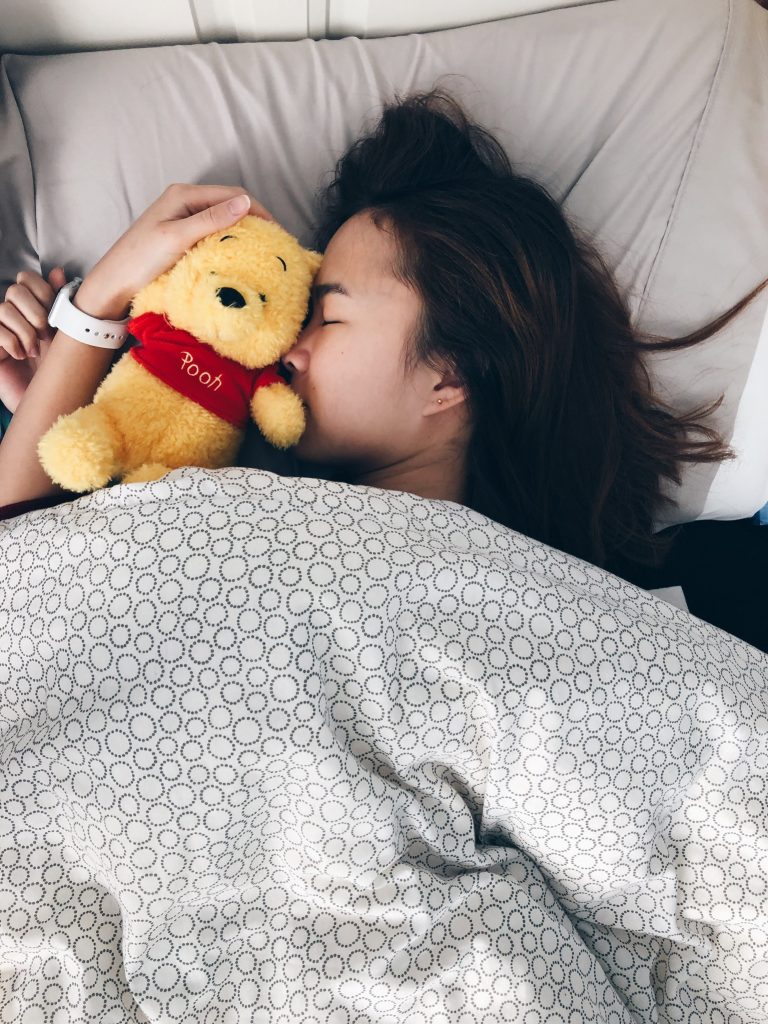
Last week, I was sick. Upon coming home from school, I walked to my bed and passed out. Physically-deficient and mentally-drained, my poor health was legitimized by a doctor’s note saying that I would not be back until this week. I needed to rest. Sleep. Drink fluids. Take vitamins. Curl up into those overpriced Marimekko sheets that I really shouldn’t have bought and sleep for hours, nights, even days. REST!!!

Who wouldn't want to fall asleep in this Finnish bedding set? Apparently, me.


Yet I panicked. Particularly about two classes. One seminar course I am in has three students (I am included in this number). If I am absent, it’s pretty obvious. Not to mention that I made a pact with the two students to always go to class otherwise things could get awkward. Another course, Inuktitut, is a language class. If I miss one three-hour lesson I will be severely behind and then I really won’t know what anyone is saying (this is already a minor problem when I actually attend class).


I decided to drag myself to school. Be an active participant. Listen (although my hearing was a little off). Try to speak Inuktitut (in a nasal accent). Take notes (bad ones because of the blurry eyesight). I actually ended up sitting beside another student who was recovering from something else in Inuktitut. We shared the tissue box. Either way, I would have felt bad going or not going to school. Since my illness was not contagious, I didn’t feel like I was going to make my classmates sick although I think because my immune system was down I caught something new. I also feel like I wouldn’t have slept if I stayed home but would have been awake in bed obsessed with what I was missing.


This is the second time I have been ill this winter and my greatest fear is that my professors won’t believe me when I say I am sick (which is why I always get a pricey doctor’s note). Isn’t that terrible? But it’s true. I’m always paranoid that I might come across as a lazy student who can’t be bothered to roll out of bed and make a bad impression on faculty. So I usually push myself to do things I shouldn’t be doing to save face. A sad looking, exhausted face with sore eyes that can’t stay open. But face, nonetheless.


This year I am constantly surprised by how supportive and understanding my professors have been whenever I’ve confided or relayed any personal information about myself. When I told the professor who teaches the three person seminar that I was not feeling very well, she told me to not worry about missing a class. Since I’ve had her before, she knows that I have a solid work ethic and I don’t use excuses in order to get out of class or work.


I wish I listened to my body instead of guilty conscience (you can still walk, you aren’t that sick!) and overactive imagination (my professors will think I am skipping class because I am lazy!) because by Friday, after attending nearly all of my classes, I felt extremely horrible and was miserable at my father’s birthday.


If you have any concerns about missing school because you are not well, I really encourage students to contact their Registrar’s office. Also, get a sick note, if possible, from your doctor. And don’t be afraid of letting your professor know that you are not well and may not come to class. Professors get ill, too, because they are only human. I guess being sick reminds me that I am only human, too.

Erin

Things we can all be thankful for

Let’s be honest with ourselves: in the words of Sartre (well, not really), things just got REAL. I don’t know how it is for everyone else, but my to-do list is covered in highlighting and red pen and exclamation marks. I might be behind by “a reading or two”. It’s possible that I have started brushing my teeth in the shower to save time. Yes, the illustrious afternoons of sipping-iced-tea-while-reading-on-the-lawn have been replaced by late nights of working through one more problem set and wondering why coffee doesn’t work anymore. Happy October, lifeatuoft!

Whether you’re completely new to this, or you’re like me and been here since dinosaurs were declaring their majors, it’s easy to fall into some bad habits. Does licorice suddenly seem like a nutritious meal? Have you started calculating your hours (or mere minutes) of sleep in terms of the number of words you could have written in that time? Are you reading lifeatuoft because it’s “kind of related to university”, so it’s a great excuse to take a break after 18 hours of studying?

At times like these, there are some things that we as students can be especially thankful for.

#1: Healthy foods that don’t require cooking.
Let’s face it – I’m the last one to want to julienne cucumbers when I have 6 chapters to read by tomorrow morning. Cheeseburgers are probably not the answer. Apples, yogurt, granola bars, and sushi are great options to keep in your fridge, because replacing actual food with fast food is that very special version of hell that your mother tried to warn you about.

#2: Hart House and the Athletic Centre.
Defy the status quo and spend more time being active during the busy times of the semester! When you create a weekly study schedule, plan 3 or 4 short trips to the gym to work out, get a massage, play pick up sports, or take a dance class. For free! FREE! Your body and mind will thank you.

#3: Having lunch with your best friend.
Eating PB&J while sitting on the floor of your dorm room in track pants and talking about life with your best friend is one of the great joys of undergrad that just will not happen when you’re 40. Savour it. These moments will also help keep you sane after spending three days straight in the library.

#4: Sleep.
I learned the hard way in first year that sleeping every second night wasn’t actually “more efficient,” and that you can’t replace sleep with Red Bull and be able to do crazy math proofs on a final exam. FACT. So, when you’re planning out your day, remember that you can’t actually use all 24 hours of that day at Robarts. At least, not sustainably.

#5: Your College Registrar, the ASC, Accessibility Services, and your TAs.
As perfect as we all are, sometimes we’re not. These people have incredible power and compassion to help you with challenges that may stray into your path. They were all students once, too. Be honest with them and with yourself, and there will almost always be a solution to problems you might be having.

#6: The people in your classes.
More specifically, actually talking to them. Not only are the people you meet a potential study group, but you’ll learn more and finish your work faster. Plus, that late-night chemistry lab suddenly won’t seem like such a chore.

#7: Drop deadlines.
Well… you know the drill.

#8: Moments of Zen.
And by this, I mean the most sacred dates on the university calendar: Holiday Mondays. Take these days and use them for their intended purpose – eating delicious meals, watching Sister Act, and getting outdoors. Put down the [required] reading and take a day to recharge.

#9: Perspective.
As all-important as the college election, your term paper, or an argument with your roommate may seem, taking a step back and asking, “How will this affect me in 5 years?” is sometimes necessary to remember the truly important things. Which brings me to…..

#10: All of the amazing people in your life.
They’ll love you no matter how badly you did on the last quiz. Seriously. So go make a hand turkey with them, and have an amazing, stress-free Thanksgiving Weekend.

- Jennifer

Indulge…in a campus spa day

Readers, how was Reading Week? Did any of you take advantage of the (fingers crossed) last dump of snow and go for a skate or a cross-country ski?

Instead of spending my Reading Week writing my sociology paper, I had some quality “me” time. I hung out with friends, got caught up on all the Best Picture nominees before the Oscars (yah “The King’s Speech!”) And, I’m proud to say, got quite a few good workouts in.

Usually when I get back to school after a break from the books, the panic and regret of “how I should’ve spent my time off from class” sets in immediately. AHHHHHH! Paper! Midterm! Presentation! No time! But this time, I came back to school fully rested and recovered. My usual army of unhealthy fixes: sour ju jubes, caffeine and compulsively checking Facebook, were not needed for this essay. Instead, it was: research, write, edit, and hand in. Who knew the writing process could be so simple?

For me, this experience proved that I need to take more “Reading Weeks”  to do my best at school. A bit dreamy, I know. But, instead of taking a whole week to relax and re-fuel, I could schedule one day each week to be my own “spa day.”

Celebs, like Brad Pitt and Angelina Jolie, visit exclusive spas when they need to unwind from their busy schedules. Now readers, I don’t about you, but their budget is a little bit bigger than mine! I simply don’t have the extra cash to spend on lavish massages, thermal baths, and pedicures.

But I’ve paid my student fees, which means I have access to many services and activities on campus. Here’s my attempt at indulging in a free “campus spa day”:

1. Swimming: For me, it wouldn’t be a spa experience without a swim. I did about half an hour of lane swimming during women-only hours at the Athletic Centre to get some low-impact exercise and enjoy the therapeutic sensations of floating on my back and putting my face in the water. When I was done, I cleared my pores by sweating out toxins in the steam room in the changing room.

2. Massage: Readers, did you know we can get free massages on campus? Just stop by Hart House on Mondays from 11-1 until April 4, for a free mini shiatsu massage. It was absolutely wonderful to get the knots of tension released from my head, neck and shoulders. Oh, and following my massage on Monday, I had a hair cut at “The Hair Place” at Hart House. Getting rid of my split ends really added to the spa experience!

3. Yoga: This term, I’ve registered for the Mind-Body Flex Pack, which lets me go to any yoga or Pilates class at the Athletic Centre. After my spa day’s ashtanga yoga class, I’ve progressed from basic poses to “binding,” a more advanced option where you use more flexibility to intertwine and lock your arms to pull yourself into deeper stretches. If you’re not registered for a class this term, there are some yoga classes on the drop-in fitness schedule at the Athletic Centre that you should check out.

4. Sleep: I topped off the spa day by going to bed early!!! For me, the biggest challenge of getting to bed on time is turning my computer off. This makes me tired and groggy the next day, which means less motivated to get to the gym and hit the books. According to a 2009 U of T Health and Wellness report, 22% of U of T students reported that problems with sleep negatively impacted their academic performance. So, in order to get the full academic benefits of my “campus spa day,” sleep needs to be a priority.

Yes, the concept of a “campus spa day” is a bit of an oxymoron (Campus: Exams! Stress! Marks! Due dates! Spa Day: Relaxation! Rest! Massage! Hot baths!). But, I know that taking one day each week to rest, relax, and re-charge will help me do better academically by making me more focused, have less anxiety, and work more efficiently.

Oh, and readers, if you have any other activities to include in our “campus spa day” itinerary, please let me know!

It’s New Year’s, time for resolutions!

Happy 2011, dear readers! Hope you all had a wonderful holiday filled with fun and food and friends and family.

We all know what most people make during this time of year: the New Year’s Resolution. It’s the time of year where gyms see a marked increase in subscription purchases, and we vow to change our lives and do this and do that.

But we all also know that most people don’t achieve their New Year’s Resolution(s); in fact, most have already forgotten by the end of January!

(New Year’s Resolution postcard from 1901, United States)

So how do we keep the resolution(s) we make?

I remember back in high school guidance class, we were required to read The 7 Habits of Highly Effective Teens, by Sean Covey. Like the rest of my class, I scoffed at the book, but after the end of the semester, it was the one textbook I kept, and to this day it’s still on my bookshelf. The one thing that I remembered from the book was about goals and habits, and it said that the success of goals depends on the formation of habits.

Forming habits is easier said than done of course; after all, you’re trying to change the way you’re used to doing things! I’ve made many goals (if you can believe it, everybody was required to goal-set at the beginning of each semester and share it with our homeroom teacher in my highschool) and looking back, I realize that the ones that were successful were the ones where I’ve learned to form new habits. Funny fact: setting goals has now become a personal habit because I was forced to do it regularly since grade 9!

I’ve found that there are several things that help me to keep my goals and form new habits, and I thought I’d share them with you. It’s not the only be-all and end-all of goal-setting of course, but it’s what I’ve found to work best for me.

1) Costs/Benefits

I think this is the most important thing to do – to know exactly what you’re getting yourself into. It’s easy enough to say “I want a better GPA!” but it’s much harder to realize that this becomes a priority commitment. This may mean having less time to go out, not doing other things you want to, studying longer hours, etc., but having a better GPA means getting into the grad school you want and the feeling of satisfaction at having done your best.

Thinking through what my goals cost me have allowed me to be realistic about what needs to be done to achieve it, and so, for example, when I have to turn down a party because I need to study, I’m already mentally ready to make the decision because I’ve prepared for it. This makes me go, “oh yeah, I need to study because getting into grad school is important to me”, instead of, “ARGH, THIS SUCKS. I HATE SCHOOL. WHY. WHYYYYY.”

(or well, it minimizes the latter thought to a faint whisper instead of the loud roar that it would have been, heh.)

2) Breaking it down

If you want to eat a pizza, you’ve first got to slice it up! Same with goals. “Getting a better GPA” is huge. I’ve found that dividing a goal into manageable chunks makes the goal less lofty-feeling and scary, and easier to accomplish. By being more specific, small goals also conveniently turn into action steps, liking plotting a route on a map to your final destination.

3) One at a time

This one I’m constantly guilty of. I feel like there are so many things I want to do that I try to do a bajillion things at once. But like there are psych studies showing that multi-tasking actually slows you down, so does trying to realize more than one goal at a time. As I’ve said, small goals are like action steps, and action steps turn into daily habits. I give myself a week deadline for each habit, and re-evaluate the habit at the beginning of the next week.

For example, my constant goal is to “be healthier!” Rather than trying to change my diet, exercise and everything else at once, I started with switching from drinking juice and pop to water and tea for a week. In the beginning of the second week, I realized that reaching for the tap has become second nature, so I started the next action step, which is to walk instead of taking the streetcar every day.

4) Don’t give up

Things don’t always go as you plan, and I realized that it’s important not to beat yourself over it. Exercising regularly and keeping up readings are two big ones that I fail at, and I try to not think negatively by looking ahead. I let myself mope for a few minutes, and then take a deep breath and analyze why I failed.

Last semester, I tried to keep up with my readings by reading during my commute. That was an epic fail, and I realized that there were several reasons. Sleeping instead of reading because I’m so tired was a big one, but also little ones, like the friggin’ textbook being a giant brick that’s hard to hold if I have to stand the entire ride long. By analyzing what went wrong, I can revise my action steps and add new ones. This semester, I’m trying to get on the train a tad earlier than normal to skip rush hour so that I know I can get a seat.

5) Just do it

I love Nike’s motto. Just do it. Just go, go, go. Don’t give yourself excuses to not do what you want. That’s what I tell myself when I need to kick myself into action: “C’MON. GOOO. STOP MAKING EXCUSES! YOU CAN DO ITTTTTT!”

Why yes, I yell at myself in all-caps.

Share with me your new year’s resolutions, dear readers! How do you keep your goals? What do you do to accomplish it? Tell me, I’d love to learn your tricks!

- Cynthia