Let’s make something amazing! #joyatuoft

So, last Monday at around 10 a.m. after a very late night and a very early morning, my restless pursuit of coffee through the Bahen Centre was met with this:

YES. It was like MY DREAMS HAD COME TRUE: my very own foot-piano! Delighted, I tapped out a little “Gin and Juice” before texting a very good friend and promising him I would serenade him in a way unlike any other if he would immediately make his way to Bahen Centre. This month - in the middle of winter, as Singles’ Awareness Day looms on February 14th – the office of student life is on a massive campaign to get students talking about how we find joy on campus. For me, joy is in the things like this; it’s something we can create.

As a result, my dear lifeatuoft readers, I propose a challenge: this month, make something. Make something cool. Make a piano you can play with your feet. Or whatever. Make something that no one’s going to mark you on but it doesn’t matter because it’s awesome. In high school, I used to paint and play in a garage band and build things in the tech wing of my school. Coming to university, many of us forget our old hobbies. So, I’ve compiled a list to get you started. Some of these are semester-long commitments, while (for the low commitment folks among us) some are only one-time workshops, and none of them are more than $10:

Film-making.
There’s a part of me, deep down inside, that wants nothing more than to be a documentary film-maker. As luck would have it, the U of T Film Festival is the perfect place to blaze my trail to cinematic glory. Submissions are due March 2 at 5pm, with screenings and awards on March 22.

Robots.
They’re taking over. Make yourself their master before it’s too late. Check out the University of Toronto Robotics Association to make all kinds of ridiculously awesome robots, some of which have even been featured on the Discovery Channel.

Open mic night at Hart House.
Make some noise! Poetry, comedy, improv jazz – whatever you do, come do it at Hart House. The next event is at 7:30 pm on February 16th, and it’s free. Bring friends!

Poetry workshops.
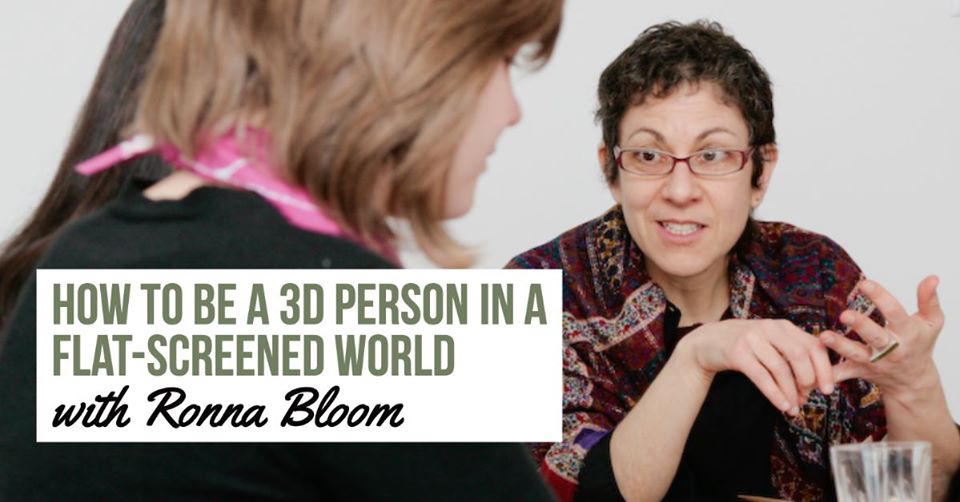
Some of you may remember that I blogged about one of the workshops with our Poet-in-the-Community, Ronna Bloom, in first semester. It was amazing, and that woman can make a poet out of anyone. Her next workshop – literally, “Writing your way out of a paper bag” – will be on March 2 at 12pm in the Hart House East Common Room. Free.

Animation.
A masterclass in low-budget animation, $10 on March 20 at 6pm, Hart House. “Understanding the Illusion of Life“ is a beginners’ workshop where we’ll learn how to make an animated film from brainstorm to final cut. Excited.

Photography.
A very active and amazing campus group, the Hart House Camera Club is currently accepting submissions of photography for their annual exhibition. If you’re still looking to develop your prints, they’re offering a “Darkroom Days” event thus Sunday (February 12) at 2pm.

Food!
If you like to grow food, you can get involved with Dig In! Campus Agriculture, who are an amazing student-led group committed to growing sustainable food on campus. They even do beekeeping! If you’d like to get busy in the kitchen, I suggest you check out Hot Yam, a student-led group where you can cook (or just eat!) healthy, delicious creations on Wednesdays at the Centre for International Experience. It’s okay if you just want to show up and eat their stuff and then run away. That’s what I do, and it’s delicious.

Crafts.
Every Thursday at 11am in the Hart House Reading Room, come get crafty, for free. Next week: friendship bracelets. Or, study group bracelets, should you feel so inclined.

Life drawing.
The Victoria College Life-Drawing club meets Tuesdays at 8:30pm in EM108. You can join them to draw, OR you can even get semi-naked for them and watch all kinds of student artists draw your luscious body. Your choice.

——————–
Overall, I’m excited for all of the opportunities this month. With graduation and my future looming in the approaching not-so-distant future, a friend and I were chatting about what I intend to study in grad school. I listed a few of my ideas but told her that I couldn’t seem to decide which one, and her advice was to go out and create something in each discipline, and see which one felt right. In academic life, it can be easy to forget to stop abstracting and start creating, but maybe doing so is a great way for all of us to rediscover ourselves and see our interests in a new light.

Any other suggestions? Feel free to add them in the comments below!

In the meantime, show your classmates what you’ve been up to! Post your adventures to the Joy at U of T blog!

Jennifer

Dances of hope and healing

I’m surrounded by strangers and TV cameras and bright lights as far as the eye can see. Somewhat unlike a typical lecture, there’s a certain energy about the people in the rows and rows of wooden chairs. The excited buzz of conversation around the room is gradually replaced by a rhythmic clapping; each of three parts of the room carrying a different syncopated beat. African drums are struck at the front of the room, and in call-and-response, we all begin to sing.

This isn’t the way I thought we’d communicate about a disease that currently affects millions of people every day. I expected an evening of solemn statistics and heavy hearts. What I found was a celebration of common humanity, when on Wednesday night I attended a World Aids Day event at Hart House, presented by the Stephen Lewis Foundation.

As many of you probably know, Stephen Lewis was, from 2001 to 2006, the United Nations Special Envoy to HIV/AIDS in Africa. I first learned of his incredible work in 2005 or 2006 when a high school teacher encouraged me to read Lewis’ Massey Lecture, Race Against Time. I was able to see Lewis speak during the following year at a public library, and was captivated by his passion to not lead from an office, but from the ground. In perfect contrast so many volun-tourists and 2-week-prophets that like to speak about Africa, Stephen Lewis exhibits an authentic commitment to reaching out and genuinely caring for other human beings without a hint of self-righteousness.

The event was opened by a stunning spoken word poetry performance by d’bi.young titled “Dear Mama,” telling the story of a Canadian daughter sharing news of her HIV diagnosis with her mother at home in Africa. Tears trickled down my face as she pleaded, “mama I want to come home / only you alone can love me / but ya have to promise / that ya won’t tell nobody / about my shame.” Through all of this – as one of the fortunate few to have a life and social circle untouched by HIV/AIDS – I was given a glimpse into the pain and hope of others. The speakers at the event emphasized that scientifically, we’re rapidly approaching new ways of preventing and reducing risks associated with the transmission and progression of HIV. They reminded us that medical treatments, however, are not enough. It takes the care of a cohesive community to create the psychosocial structure in which health-consciousness is established and the physical and emotional needs of infected individuals are met. A woman who had been a social worker in an HIV clinic for 23 years was sitting next to me and in our conversation, asked me why I was at the event. My simple response – “to listen” – felt trite and inadequate. I felt like it was wrong of me to be in this special, almost sacred place and to have nothing to give.

Maybe, though, there is instead something I can take, and keep, and nurture until it grows. As I listened to poems and stories and dramas and songs about this world so far from my own, I started to see connections. I worried about how the stigma attached to HIV treatments in Zambia inflicts a similar scale of suffering and violence that the stigma attached to mental illness does in Canada. I saw the way that dance and music helped children rise up and find reprieve from some of their suffering that resulted from personal or family experiences with HIV/AIDS. It made me think about how arts – music, dance, poetry – can become a valued, collective expression of the passions of a community, rather than something rehearsed, performed, and judged. I wondered what radical honesty might look like in the face of our suffering – to dance to the songs that move us, to write poetry about the weight that we each carry behind us, and to write and speak fearlessly and honestly about our feelings not merely toward our circumstances, but to the people who comprise our worlds.

I’m grateful for the health and community I’ve been granted, but to know how lucky I am makes me just feel like we all need to keep asking for more. More stories, more healing, more compassion, more dances, more love. As I sang out under the bright television lights, I felt, for a moment, less alone than I had in a very long time. This need to feel a part of a community is by no means exclusive to those suffering from life-threatening illnesses – it is a fundamental human essence. And so why do we deny this to one another? Where does our compassion hide when we’re not singing? And why do we ever stop?

I like to think of all of the ways we could care about each other with a love like that. Even if we aren’t doctors or researchers, I feel like these moments of open ears and minds and hearts are underappreciated ways in which to make life just a little softer for others, and almost certainly, for ourselves.

- Jennifer

What would you do if you had the courage?


After walking into a cozy, hidden room full of strangers at the top of Hart House yesterday afternoon, the first question I was met with did not ask my name, or why I was there, but: “What would you liked to have done in the past, if you had the courage?” And so began my first time attending a workshop in the “Courage to Connect” series, hosted by the U of T Poet-in-the-Community, Ronna Bloom.

I will admit, I had anxieties about attending the workshop. There’s a tiny part of my soul that is a spoken word poet, and a significantly larger, louder, more well-cultivated part of my soul that tells me to go to the lab and do some science instead of attending a poetry workshop because what if they make you read your poem aloud and it’s terrible and everyone secretly feels embarrassed for you and tries not to make eye contact? Indeed. What if.

In the name of lifeatuoft, I did it anyways. I will write terrible poetry and share it with people I’ve just met, just to tell you about it, my dear readers – remember that. Despite my trepidation, Ronna welcomed us with sincerity and quickly transformed the room into an experimentation-positive, emotion-positive, expression-positive space. She began by laying out the rules:

1. Don’t think.
2. Don’t censor your words.
3. Keep your hand moving for the entire writing period.
4. “You are free to write the worst crap possible.”
5. You don’t have to share your work with the group.

Somewhere between rules 4 and 5, I decided that I might like it here.

Interspersed between writing prompts, she read us passages of her work and that of others to enliven and inspire us. We were given the space to share our work if we were ready, or merely to sit silently and appreciate others’ ideas. Poignant words were met with an appreciative collective stir or gasp. We talked about the act of writing, notions of courage, and the courage that can be found in the writing process itself. While some in the room were seasoned poets, others were simply curious and open to experience. Either one was perfect.

Reflecting on our place within this university community and what we wish it could be, Ronna invited us to ask ourselves, What would I do if I had the courage? What scares me? What are people going to see? Who? What are you afraid you’ll say? What are you afraid you won’t say? What do you need to be free?

I found that the answers these questions evoked when I was forced to stop thinking – stop censoring; ‘stop stopping’ and just write – were radically different than the ones that I might normally have allowed myself to create. I listened to the words of others and they felt like warriors within their own lives. In the hour we spent together, I experienced a humanity and honesty that I’ve been missing; I’d found people who were ready to try to genuinely communicate, share, and connect with one another.

As the workshop closed, she read one of my favourite poems, and announced to us, “Next week, come back – we’ll play some more!”

I hope that you will join us.

- Jennifer

You Don’t Have to Be Shakespeare: Write a Poem with U of T’s Poet in Community

“Poetry is a response to the world, whatever is the clearest most direct and urgent response possible at the moment. Everything feeds poetry whether it’s something you say to your neighbour or something you write on a piece of paper.”

-Ronna Bloom, University of Toronto’s Poet In Community

Sometimes there is an event or an occurrence that really affects us. And we don’t always know why. It can be irrational, like a surge of self-righteous anger after an imagined slight from a friend; or a random experience of happiness at the sight of a beautiful thing normally overlooked. And how do you explain, or even understand this kind of occurrence? Imagine chatting to a friend about how you feel that you’ve reached some kind of emotional truth by watching the early morning sunlight filter through the trees. Your friend is more likely to look at you oddly and ask if you’re sure you didn’t take too much cold medicine before going to sleep last night than to understand and appreciate the emotional significance of your experience.

According to Ronna Bloom this is the purpose of poetry: to express that which cannot be otherwise articulated. As University of Toronto’s Poet in Community since 2008, she believes that the importance of poetry is not necessarily related to the strict, analytical approach of academia. Basically, you don’t have to be Shakespeare to have the ability to express yourself through poetry.

The Poet in Community program is rather unique in scope: Bloom works with Hart House and the Multi-Faith Centre, as well as with various academic departments and faculties to create unique poetry workshops that range from “The Spontaneous Poetry Booth” that was hosted at both Hart House and the Academic Success Centre to a workshop called “The Four Truths: Writing as a Spiritual Practice” that was hosted by the Multi-Faith Centre.

A writing workshop that took place at Hart House called "A Writer's Process."

A writing workshop that took place at Hart House called "A Writer's Process." Photo courtesy of Ronna Bloom.

I spoke with one student, Desmond Watts, who helped organize the programming at the Multi-Faith Centre with Bloom and has participated in quite a few workshops. In general, programming can range from a one-off event to a four-week long workshop with one hour-long session each week. Events and workshops are always free. Desmond explains that at the Multi-Faith workshops there were generally around 15 people in attendance. Bloom will introduce a topic or a prompt, and attendees are given some time to write down something on the page. There are a few rules, the most important of which being: in the allotted time period you’re never allowed to stop writing. Once the time is up there is an opportunity to share your work, but you don’t have to.

“It’s really good sometimes to just stop thinking and write,” Desmond says, explaining that it’s also a really unique way to get to know people. “What you’ve written isn’t that polished image that you show to the world. I can walk by someone from the workshop on the street and say ‘hey’, but it’s cool because you still feel like you still know them differently than even their best friends might.”

To me, this all sounds completely terrifying. Taking a topic and writing in a completely uncensored stream-of-consciousness style is fairly alien to me, even though I’ve written my fair share of essays, articles, short stories and poems. (And blog posts!) I’m not sure if I could share something I’d written about a deeply personal experience without obsessing over my comma usage for at least two hours.

But, then again, there’s also something liberating about the idea of sitting down and writing without having to worry about the consequences. As my fellow humanities students will know, you don’t ever write into a vacuum. Every paper that you write will be judged, graded and qualified. It can be hard sometimes to get any words out onto the page at all without imagining some kind of ghastly editor hovering over you with spectacles and a giant red pen. (Which, incidentally, is the plot of one of my recurring stress dreams.) And these workshops aren’t a classroom, nor are your fellow attendees editors. You’re able to work and to learn, but you don’t have to worry about the dreaded red pen.

The program will continue in September with plans for 12 workshops that will be open to anyone in the university community. The first planned series is “Where Desire Meets Spirit” starting September 28th at the Multi-Faith Centre.

Crumpled Paper Magazine: Looking for Submissions. Draw instead of Facebook!

Sometimes I want the professor to goad the pretentious commentators in my classes just so I can doodle. I can’t doodle at home. I can’t doodle when I concentrate. Then my brain goes “Hey. This looks pretty good. Let’s turn it into the Mona Lisa WITHIN THE NEXT FIVE MINUTES.”  Doodling is like meditating, or thinking of nothingness, or… hmm. It cannot be forced. It can only stem from the act of zoning out, when Bob begins to banter on about the postcolonial implications of the introduction of the remote control into the workforce.

There’s also the serendipitous happening of putting down your calculus book for five minutes. Five minutes that turns into four hours in front of a white space. And by the end, that white space is absolutely beautiful.

But who do you show it to? Facebook is evil, Deviantart takes forever to load… maybe you want a tangible, non-internet solution?

Oh em gee! An art magazine at U of T!* (One of many?)

Aaaaah, admit it. You thought U of T was artless, too. It kind of is. You have to peek into the quietest corners, and it’s usually the expensive, art-so-fine-you-normals-can’t-understand-it, like a huge metal framework that looks like a 3D scribble. Actually, that would be really cool. OkayItakeitback. Fine art is awesome, no matter how I try to poke at it. IMO, it’s also good to see artwork by some random student you wouldn’t see otherwise.**

Crumpled Paper Magazine was previously just for the engineers, the students who probably have the smallest opportunity to get an artistic fix (i.e., crazy workload). Lucky for everyone else, they now accept submissions from all students across campus.

They are looking for submissions RIGHT NOW.

The deadline is October 5th (next Monday). Send in your lost poems, your bad poems, that one drawing you did that was really good, short stories, comics, photos, photoshop tirades that turned out pretty cool, the multi-page doodles you do in class, haikus about your lectures, paintings, grocery lists in the form of song lyrics, mock movie posters you did for high school, I don’t know. Any creative stuff you find under your bed that can be printed.

The desire to submit work is a great excuse to be creative. “But Ma! My stick person samurai epic must be known to the world!” Who knows; that same epic you randomly chose to send to your campus publication might become a regular for the Daily Bugle in ten years. Oh yeah. It happened to the Boondocks (save for the fact that it didn’t consist of stick drawings). Judging from the General Meeting I attended last week, the atmosphere around the magazine is pretty darn friendly, too. No berets and bongos to stifle you.

I say this probably because I am an artist whose drawing droughts go on for weeks and lead to the kicking of puppies, but I believe art is necessary to one’s health/sanity. Especially the health/sanity of someone whom is potentially submerged in facts that go nowhere***, numbers, or literature that may or may not be incredibly boring (insert Paradise Lost jokes from last year). A change of pace can stop you from going crazy, so… I don’t know, take half an hour one day to get back into being creative (or try it for the first time). It’s half an hour you’ll spend on Facebook anyhow.

Oh, use Nuit Blanche as inspiration, too! In fact, go to Hart House on October 3rd. If you really feel you have nothing to submit, Crumpled Paper’s website declares layout helpers are always desperately needed.

If you’re already a visual art student… do a friend’s math assignment one day.

-

In short, there is an art and creative writing magazine called Crumpled Paper on campus, generally found in the engineering area. They are looking for submissions. Send your stuff to cp.submissions@gmail.com by October 5th.

- Liesl

P.S. WTF****?! What’s THIS?! I have found… Platform 9 ¾.

-

-

-

-

-

*t3h un1nt3nd3d rhym3z

** There may or may not be a space on campus where student artwork is displayed. I think it’s at 1 Spadina Crescent, but that’s another post for a not-today.

*** social science, moreso than philosophy

**** ‘Frankenstein’. Four asterisks!

UTGDDC: Game Making Deathmatch, and a Tribute to Randomness

I hope you like non-linear narrative

GAME MAK-

Ah. Before that, did I mention our ‘in-house’ game project this year? We’re attempting to develop, or at least flesh out the ideas needed to develop, our own game within the club. So, yes; every member can be involved, and it looks as if we are on our way to assigning roles and whatnot (which will probably be assigned by the time this post goes up). Right now… it looks like we’ll have some zombie dogs and fetal pigs, and perhaps mustard-related weaponry, among other things. It’ll be good. Join us.

As I was saying,

GAME MAKING DEATHMATCH

TANGIBLE-NESS: all/most of the games made during the competitions are available for download. Free procrastination on a stick.

2004 – Deadly Traps of Outer Space
(Prizes included an Xbox, a DS and having your soul stolen by EA!* Sweet!)

2005 – Dimensional Disturbances

2006 – “The stress of a red blood cell during the preparation for an incoming virus attack.”

2008 – Deadly Viruses from Dimension N+1 and Planet Earth and Frogs with Potatoes on the side

See? Randomness. Although ‘dimensions’ appears to be a running theme.

-

Captain’s Development Log/Professor Lseil’s Brainstorming (Torture) Session

(yes, if you participate, you too can subject yourself to the unforgiving creative process and/or self-loathing at your empty brain if applicable)

-

Done So Far:
-
1. Register: done.
2. Wait with tantalization* for the start date and the theme to be announced: also done.
3. Hear theme: Heard. DON’T SHOOT THE PLANTS.
4. Immediately come up with seven ideas that are no good: Did.
5. Realize a week has gone by and you still have no ideas. Or those seven: Yeap.
-
Quelle Sort De Day-by-Day Thing
-

Weekend: nothing.
Monday: nothing.
Tuesday: Decided on ‘something small’.
Wednesday: Thought of the name, “Zsa Zsa GaBoar”

Thursday Morning:
-
Welps, I gots nothin’.
-
One does not have to be an experienced programmer with a basement game studio begun in the midst of one’s pimply high school years to enter GMD. But.
-
It would help. A bit.
-
It’s been a week since this thing started, and everything I’ve come up with is too big. Like, I’ve got… faerie assassination conspiracies, but Metal Gear Tinkerbell would be really… omg, what did i just say.
-
ANYWAY.
-
Thursday Afternoon:
(during poetry class)
(during which i fell asleep)

(and drooled)

  • There is the issue of using some kind of freeware development tool, such as Gamer Maker Lite, or using Python, the programming language being taught in the first-year Computer Science class. The latter would require thinking, the former is a point and click, no programming required type deal. Anything free and accessible to common folk is usable in making your game. No Unreal Engine expensive-fandangleness.
  • There is the possibility that any code written on a U of T computer is owned by U of T. Keep that in mind, if you work on it on campus. I really should determine if that is true before I tell you…
  • “Eckt Doighcktt.” This is something my professor pronounced from T. S. Eliot’s ‘The Waste Land’ and I wrote it down.
  • Because the theme is plant-related, I seem to have transcribed all the plant related stuff from the poem. ‘Chief garden’, ‘botanical’, ‘stamin’, which is something to do with a family tree…

-

The only thing you could possible take from this is an encouragement to be creative, if you’ve registered.

-Liesl

-

-

-

*The opinions expressed in this post are solely that of the writer. Do not shun the club on my behalf. And I like Mirror’s Edge…?

Death By Poetry

It’s Sunday night and I’m surrounded by coke cans, empty plates, chocolate bar wrappers and bottles of Real Canadian Natural Spring Water. My neck is bent up at my screen in an unhealthy angle and I have a mighty headache to match my beaten spirit and disheveled hair.

Kids, this is what your editor looks like. Well…what one of the editorial board looks like.

I’m plowing through this year’s submissions for the Hart House Literary Review and it isn’t the fun and easy-breezy process I thought it would be when I signed up for this task. There are 309 pieces sent in by 100 people…and so far I’m only at undergraduate author #047 (piece number 162). My comments are becoming less and less detailed and professional. I’ve had three weeks to do this, and my evenly spaced self-imposed regiment of reading has faced some challenges. I’m jumping into this at every spare second now.

And it’s not that the entries here are bad, actually, most of them are good…really good. That’s the problem: what makes this poem any better than that poem? Is this description more accurate? Touching? They start to feel the same in their “goodness” to the point where really a really bad entry will stand out like a beacon of clarity. But as for all the ‘good’ ones…they all start to feel the same in their descriptions and forms…I start to ask “which one would get published?” I’m waiting for that piece that will, every now and then, jump out from the rest.

My reading goes in cycles. At first I’m sympathetic and see the good in every writer. Twenty minutes later I’m more honest with my self as I check the “yes” “no” and “maybe” categories. There are less and less maybes. Then I get brutally honest, more and more so until I decide it’s time to take a break, get a can of coke, or eat another cookie as a mood restorative.

Poem upon poem bounces up on my screen.

Romance

Loneliness

Uniqueness

Archaism

How much society sucks

Art

What is art?

Fields…lots of fields…

Snow

Frost

Rain

Sunrises

I have a little chart, with a number and a letter to go with each piece.

It feels pretty endless.

I know that these poems (it is mostly poetry here), they were probably written to be read by themselves as little literary droplets…not all together, pounding some one person (me) across the forehead en masse.

What is a good poem? What is a bad one? I forget halfway through and just slough through…I must finish! I have to get through this!

I start to feel vaguely ill. I get cranky and pretentious. I’m tired of reading material by 20 year olds trying to sound like their writing from the 19th century. I’m sick of words like “evanescent” and “periphery”. Why does every narrator smoke a cigarette? Why are all these young people so unhappy? Who is it that’s running around breaking all these hearts in the English department here and exactly how physically attractive is this person?

And then…there it is, up on my screen…

Something by someone, a piece of writing that wakes me up and shakes me, jumps down my throat and reminds me that young people can be innovative, creative, inspiring, funny, perceptive and original…

I remember why I signed up for this. Yes! I press the letter “y” beside their number on the chart with feeling before I sit back and feel good for a second.

Then I remember I have over 100 submissions to go through plus my readings for class…and then there are those two essays I really need to start thinking about…

I slurp back some more cola and click on another poem.

I wish I were getting paid for this.

Get a little literary

Last weekend I got a little literary on myself, and before I went to work on Saturday, I walked down to Hart House and went to the Stories That Bind Festival, a free event celebrating multicultural writing, dancing, and performance art.

I got there in time to hear Priscila Uppal, and Dae Tong Huh read some of their fiction and poetry, and to hear Al Moritz read a short story. It was refreshing to sit down amidst a crowd of people and listen to the authors read, but to not have to jot down notes at top speed. A bit like being read bedtime stories as a kid: totally recreational, and all you need to do is sit, relax, and ingest.

It’s been a long time since I’ve gone to a literary reading, and it sort of reminded me of Trampoline Hall, a monthly event held both in Toronto and New York where non-professionals give speeches about specific topics. Some past speeches that I’ve seen included topics like War Craft, Amazonian Exploration Mishaps, and Fungus. They’re a real lark, and surprisingly informative too.

Between the readings at Stories That Bind, several groups of dancers of all ages performed a number of colourful Korean Ham Mam dances. One of the dances involved about a dozen girls, whose dresses were adorned with sleeves that flowed down in streams of silk to about the bottom of their dresses, instead of ending at the wrist. When any one of them moved their arms, the sleeves replicated colourful wings or flags, flowing around the dancer. It made quiet the impression when they all moved in syncronocity. In another set the young dancers, all in layers of dyed silks, drummed along with the music while dancing around.

The event that got the most attention was a magic show put on by Jason McConnie. A lively crowd of both kids and adults sat around the room while he mysteriously put into play a number of tricks involving knives, boxes, and human heads, and all other sorts of fun.

Some of the other performances between readings included Axe Caporeia, Slovenian folk dance, two storytellers, and some music by the Sandy MacIntyre Trio.

I learned about The Stories That Bind Festival from the Open Book Toronto website, an organization that features and publicizes Toronto and Canadian writers. The idea behind Open Book Toronto seems to be to keep Toronto’s literary scene accessible through the promotion of readings and literary events, which can be found here. It puts a strong emphasis on independent authors and publishers, and on showing a wide range of authors. It also has a new writer-in-residence, Linda Rogers, who has a blog of her own (oh wow!), where you can ask questions pertaining to writing and get back personal responses. Events aren’t only literary, either. Although you find a lot about various reading series and book launches, the site also includes dancing nights, film festival showings, and art exhibits.

- Mary