Getting Out of a Rut

“…And when you’re in a Slump,
you’re not in for much fun.
Un-slumping yourself
is not easily done…”

-        Dr. Seuss, Oh The Places You’ll Go

University has a structure associated with it. A process and solidity that many find comforting. We go from one year to the next, attending lectures and seminars and completing assignments and tests. The campus, despite being large, becomes a second home and the friends that we’ve made along the way become family. But sometimes the regularity and predictability that the structure of school offers can become repetitive and dry. Boring. But it doesn’t have to stay boring.

Stepping out of our comfort zone can be a good thing.

I’m a shy and reserved person and it’s easy to let that hold me back. It’s easy to want to withdraw from conversations or opportunities because I feel uncomfortable.

When we sit in the background, we lose control of some aspects of our lives. We’re the only ones who can decide to step out of our comfort zones and take the risks that will ignite a spark of inspiration. Last semester, I blogged about attending my first yoga session (http://blogs.studentlife.utoronto.ca/lifeatuoft/2012/12/05/yoga-lovin%E2%80%99/). At the session’s start, I felt like a fish out of water. I’m glad I stuck it out because I’ve found that yoga is a great way to relax for me.

The world isn’t out to get us.

I see some students who are prone to playing the victim. When they’re in a rut, they like to sit in their rooms wallowing in self-pity and complaining that the world is out to get them. When we feel left out or stuck, it’s natural for some of us to assume that it’s because other people are consciously trying to leave us behind. But it’s all a matter of perspective. Oftentimes, the only thing that is holding us back is our reaction to the world.

The best way to get unstuck is to create work that we care about.

So much of the work we do is mandatory. And I understand that it all has a purpose. But sometimes when we lack passion for this essay or that paper, we fall into a rut. You’ll notice that the people who are the happiest and the most successful are often the ones who believe in voicing their ideas. The ones who do the work they have to without shirking the work they want to do. A friend of mine writes for The Varsity. That means she has some extra research she has to do and some extra deadlines she has to meet but the fact that she enjoys it outweighs all the extra “work.”

Doing something you’re passionate about is the best way to feel involved and stimulated. Ignoring the voice in my head that said “there isn’t a point to this” was the best thing that I did in university.

“…NO!
That’s not for you!

Somehow you’ll escape
all that waiting and staying.
You’ll find the bright places
where Boom Bands are playing…”

 -        Dr. Seuss, Oh The Places You’ll Go

Ishita

Student Burn Out — Stressful Times Call For Simple Measures

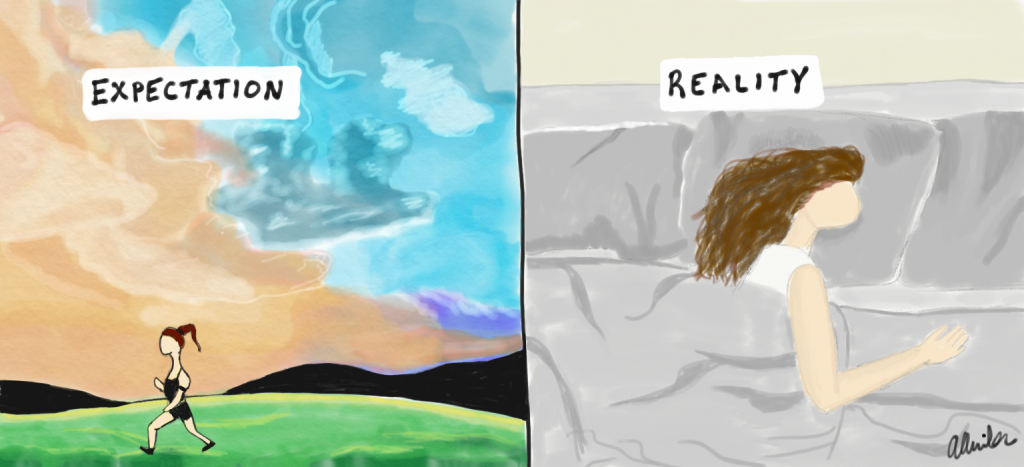
Most of us have days when we feel overloaded, overwhelmed, and underappreciated. When the dozen or so balls we keep in the air aren’t manageable. When dragging ourselves out of bed requires the determination of Hercules. It’s called burn out. If the “lacklusterness” of school or my day-to-day routine lasts for over a month, I consider myself burnt out. But it helps in knowing that I’m not alone and that it’s not permanent. I’ve even found that it is possible to feel content and stimulated with a full course load! All it requires is a little bit of organization and a whole lot of motivation. Burn out may visit from time-to-time but it definitely doesn’t have to stay!

This school year, I have experienced greater levels of burnout than I normally do. I’m not sure if it’s because I’ve entered my senior years of university and have to start making concrete decisions about the rest of my life or if it’s because the stress of the past several years has built to the point of overflowing. In any case, the emotional, mental, and physical exhaustion that I have felt the first few months of the academic year have rendered my problems insurmountable.

I suppose that the stress of managing 5 courses, 3 on-campus jobs, and a handful of personal and professional relationships was bound to take its toll sooner or later. This past semester, every day was a bad day. The negative effects of my burn out spilled into other aspects of my life. To top it off, I was sick with headaches, stomachaches, toothaches, body aches (you get the picture!) for most of the semester.

Thankfully, after several sessions of personal reflection, I’ve been able to reassess my priorities and regain my footing. When I finally accepted it for what it was, I decided to simplify my daily activities to regain control of them. I started taking regular breaks while studying. I stopped thinking about Tasks 3, 4, or 5 when I wasn’t even done Task 1. I changed what I ate to spice things up. And I wrote. I wrote down my frustrations on a piece of paper and read them out loud. Then I ripped up the piece of paper into as many pieces as I possibly could. I can’t describe how liberating it felt. And over time, the burnout faded away.

Since then, I’ve taken several steps to prevent another burnout from becoming a full-blown breakdown:

1) Lately, I’ve been starting every day with a relaxing ritual. Rather than jumping out of bed the moment I wake up, I spend at least fifteen minutes every morning meditating, reading, or day dreaming. I’ve realized that stress-free mornings translate into stress-free days.

2) I’ve set boundaries, which has probably been one of the smartest things that I’ve done during my undergrad years. I’ve started to say “no” to requests that demand my time and willpower. Saying “no” to certain requests has allowed me to say “yes” to the tasks I truly want to accomplish.

3) I’ve resolved to take a daily break from technology. Once a day, for at least half an hour (better than nothing!), I completely disconnect – shut off my computer and turn off my phone. Somehow, I find it strangely comforting when I can’t be contacted for short periods of time.

Experiencing burn out, whether or not it’s full-blown, is a risk of being a student (especially at UofT!) Some months look bleaker than others and that’s okay. It’s important to remind ourselves, however, that the best part about burn out is that it’s temporary.

Stay healthy,

Ishita

Don’t mind my bubble, I can totally still hear you…

So we’re all back to the grind now. I’ve been busy searching the internet for used text books, waiting in line at the book store, and just trying to get back into my routine.

It’s pretty much business as usual. This past week felt a lot like the first week of school in September with one major difference; it wasn’t flu season in September. While getting back into the swing of things is high on my priority list, attempting to not get infected with the flue is ranking a notch higher on the list.

Is it just me or does every single person on campus have a cold or flu? I’ve taken to carrying little bottles of hand sanitizer in my pockets. In lecture, I’ve caught myself cringing as the stack of syllabi nears my seat, on it’s slow hand-to-hand journey down my row.

Am I a germaphobe? I will admit to suffering from this affliction on a seasonal basis. If I could procure a bubble,  I would happily roll myself around campus, free from the fear of contamination. I’m not being facetious…well maybe a little, but the reality is that I simply don’t have time to get sick.

It all got very real for me last week. As I was settling into my European History textbook, I heard a splash. It had come from the back of my house, near the bedrooms, and it sounded like someone had poured a bucket of water from an elevated position. It sounded like SPLOSSSHHH. Upon investigation I found that my son had from his lofty position on the top bunkbed…how should I put this? Well, he had orally evacuated the contents of his stomach.

The aftermath was a whopping fourteen loads of laundry and hours of cleaning adjacent to the SPLOSSSHHH surfaces. The cleanup started at 8pm until went until the following day at 1PM (with a four hour break for sleep).

I remember when I was younger I never thought about getting sick. Now that I have kids and I’m trying to finish my degree, I can’t afford the down time. This illness equalled two days of missed classes and down-time…not a great start to the term.

I’m surrounded on all fronts with viral  forces. My kids bring illnesses home from  elementary school, I also do school placements at elementary schools, I travel to school on the TTC with hundreds of sick adults on a daily basis, and then I inevitably end up sitting beside people in lecture who never seem to have tissues with them when they so very badly need them.

I’ve found this great article about flu faux pas and steps you can take to not infect those around you. I’m sure I’m not the only person on campus who feels like they engaged in a strategic offensive against the flu. If you feel like your defenses could use some fine tuning, then follow this link to find some steps you can take to avoid the flu.

If you do have the flu, I’m sorry. I hope you feel better soon. Don’t forget about Health Services as U of T if you are sick and need something more than chicken soup.

-Lori


I’ve found my escape. What’s yours?

I love keeping myself busy with things I love doing, but sometimes living the 100-mile-an-hour student life takes its toll. I have this tendency to over-analyze and worry WAY too much about everything… so when there’s a whole bunch of things going on all at once, I inevitably start feeling strained. But I know that there is one thing I can turn to in order to release any negative energy. I’ve discovered an outlet through which I can burn away my stress, clear my thoughts, and just put life on hold for a while.

Ever since I took up cross-country running in my first year of high school, I’ve kept at it. It’s been two years since I’ve actually raced, but it was never really about that for me. I didn’t care about winning or being the fastest. Over the years, running has become my escape from the stresses of everyday life. On days when it feels like nothing is going my way, I’ll go for a run. When I’m angry, frustrated, or completely distraught about something, I’ll take my mind off of it by running. And when I’ve re-read the same sentence five times and the computer screen starts to get blurry, well, there’s not much left for me to do but lace up and hit the road.

I’ve come realize that it’s MOST important to make time for an “escape” when I’m so busy/stressed that I feel like I don’t have time for it. I had FIVE exams in FOUR days last week, so leading up to that my life was a blur of eating, sleeping, and studying like mad. But I also made sure to fit running into the picture, especially since it has been so mild out lately. Even if I only got outside for a bit, I always came back feeling refreshed, re-energized, and glad that I took the time out of my busy day for it.

As exams wrap up and the holidays approach, the whirlwind of festivities can be stressful too. So I encourage you to find an activity that makes you feel alive and can help you get through a bad day. It doesn’t have to be running. Maybe you are heading back home to snowy mountains, and can’t wait to hit the slopes. Or perhaps simply heading outside for a walk to see the Christmas lights lets you clear your mind. Yoga, Zumba, the elliptical – it doesn’t matter what it is. The important thing is to find something that gets your body moving, something to fall back on whenever you need to get away from all the stress and worries of the day.

If you’re looking for more ideas, then check out the MoveU crew’s awesome tips! Already got a favourite sport that you turn to as your escape? Planning a fun activity for the holidays? I’d love to hear about it!

-Lesia


Yoga Lovin’

We’ve all heard about the benefits of Yoga. It’s been said that those who practice the ancient activity achieve greater flexibility and balance as they age, experience lower levels of stress, and are better able to relieve body aches and pains. Sounds like a worthwhile exercise regime to me. Unfortunately, if you’re anything like me, beginning Yoga can be intimidating, especially if you’re embarrassed by the current state of your body. Trying out those new poses in front of a whole class can be daunting. But it’s been an activity I’ve wanted to experience for a while.

Last week, I finally plucked up the courage to attend my first drop-in Yoga class (http://www.multifaith.utoronto.ca/Events-And-Programs/Basic-Meditation-and-Classes.htm).  I walked into the studio in my sweatpants and tank top, dreading the hour long session.  I positioned myself in the first row as our instructor took her spot on her mat. She asked her customary pre-class questions: “Does anyone have any injuries that I should know about?” and “Is anyone new to Yoga?”  I timidly raised my hand. The teacher welcomed me and then explained that I would be able to see more clearly if I sat further back. I did as I was asked and the class began. I sweated and struggled my way through most of the standing and balance poses. I was very relieved when we moved on to floor positions!

As the class progressed, I realized that I wasn’t the only person who believed she was the least flexible person in the room. Most of my classmates were just as self-conscious about their own abilities and I was able to take comfort in that.  Moreover, everyone was focused on themselves and their poses, not on me and mine! Besides, Yoga isn’t about having perfect flexibility.  It’s about forming the right alignment for each pose.  As my instructor said “It doesn’t matter if you can touch your toes or not.”  I was finally able to relax and find my Zen.

When the class was over, I approached the instructor and thanked her for help and patience. She gave me several follow-up tips and invited me to her next class. I walked out feeling extremely calm and accomplished!

All in all, it was a wonderful experience for me and I would recommend it to anyone who is contemplating it.  During my first Yoga experience, I learned several lessons for use in my next sessions (yes, I do intend to continue!).  First, Yoga isn’t a competition.  It’s important to listen to your body and rest when you need it.  I wish I had realized this from the get-go. Maybe then I wouldn’t be nursing sore shoulders, hips, and legs!  Second, look for clarification!  I noticed a few students asking the instructor for help with their alignments. Asking clarifying questions will help you get into the poses correctly and get more out of your practice.  Finally, don’t take the class too seriously! There is a mistaken notion that Yoga is a bland, humorless endeavor. I was pleasantly surprised to find that that isn’t the case. Yogis do laugh in their sessions!

Attending your first Yoga class can be a wonderful experience. From improved balance to increased mindfulness, you are sure to walk away with something positive. Keeping an open mind will ensure a smooth first practice. I hope you consider giving it a try!

Happy posing,

Ishita

World AIDS Day 2012: Do Something!

November 26th – December 1st is HIV/AIDS Awareness Week, culminating in World AIDS Day on December 1, 2012.

Students from the Faculty of Medicine are inviting all students to come to Kings College Circle this Friday, November 30th at 3pm, to participate in creating a large, human red ribbon in recognition of Worlds AIDS Day.  Come out and help support this important cause!

But what is HIV/AIDS?

HIV stands for Human Immunodeficiency Virus.  HIV attacks and weakens our immune system, which is the body’s defence against diseases and infections.  AIDS stands for Acquired Immune Deficiency Syndrome.  A person with HIV is considered to have developed AIDS when the immune system is so weak that it is no longer able to cope with diseases that it would normally be able to cope with.  HIV is a virus that can be transmitted through blood, semen, vaginal fluids, rectal secretions and breast milk.  However, the most common ways HIV is passed on are through sex without a condom and sharing infected needles or syringes.

Unfortunately, there is no cure for HIV.  Nevertheless, it is preventable.

Also, if a person does contract HIV, treatment can help keep the virus under control.  The key is early diagnosis.

Great, but why does this matter to us?

Anyone that has sex without a condom or shares needles is at risk of HIV.  As of 2008, youth aged 15-29 accounted for about 21%-23% of annual positive HIV reports.[1]  This is largely attributed to risky sexual behaviours and knowledge gaps in youth.[2]

Raising awareness about HIV/AIDS – contraction, transmission, and treatment – is one way we can get involved to help decrease the transmission of this disease.  For more information check out “Getting to Zero”, the UNAIDS 2011-2015 strategy for the global HIV response.

Join the conversation:

And help out with condom distribution to under-served populations throughout the world.  It’s as easy as clicking the “share to Twitter” button on the Youtube video above: http://www.1share1condom.com/.

Never doubt that a small group of thoughtful committed citizens can change the world. Indeed, it is the only thing that ever has.

– Margaret Mead, Anthropologist

- Vivian


[1] “Chapter 4: HIV/AIDS Among Youth in Canada,” Public Health Agency of Canada, 25 February 2011, http://www.phac-aspc.gc.ca/aids-sida/publication/epi/2010/4-eng.php.

[2] Ibid.

“Asian Glow” and Other Myths

I was out with a friend the other night having a drink and I got the dreaded “Asian glow.” I can’t help it — no matter how little alcohol I consume, my face turns bright cherry red.

My friend noticed this and teased me by calling me a lightweight.  Of course, we both know that “Asian glow” isn’t necessarily a sign of drunkenness but rather more of a myth.  And, that got us talking about some of the other myths we’ve heard from before and so I decided to look up them up.

Here are some of the more common ones I found:

MYTH: Coffee, cold showers, or fresh air will sober you up.

FACT: Time is the only thing your body needs to digest and remove alcohol from its system.  The amount of time it takes depends on your body weight and the amount of alcohol consumed.


MYTH: Drinking alcohol when you’re cold will warm you up.

FACT: Consuming alcohol actually lowers the body’s internal temperature.


MYTH: Alcohol will increase your chances at having sex.

FACT: Even though drinking loosens our inhibitions, it can also impair the ability to have sex.  For men, it can lead to erectile dysfunction and for women it can impair the ability to orgasm.


MYTH: You will get drunk by mixing drinks than by sticking to one type of alcohol.

FACT: Alcohol is alcohol.  Your blood alcohol concentration (BAC) – the percentage of alcohol in your blood – is what counts, not the type of beverages consumed.


MYTH: Drugs are a bigger problem than alcohol.

FACT: Alcohol is a drug. Just because it’s legal doesn’t mean it can’t harm you.

I also found out that combining drinks like Red Bull or Monster with alcohol, tricks your body into thinking it’s not tired, making you feel less intoxicated than your body actually is which in turn can lead to alcohol poisoning.

And, did you know that women who are on the birth control pill can get drunk much faster because metabolizing the hormones of the pill makes it more difficult to metabolize the ethanol in alcohol? Also, birth control pills take three full hours to get into your blood stream and take effect.  Vomiting, for any reason, within that time frame reduces the effectiveness of the pill and therefore increases a woman’s chance of getting pregnant if she has sex.

Alcohol is certainly not required to have fun, and wanting to have fun doesn’t have to mean being reckless.  If you like to have a few drinks, knowing the facts about alcohol can help you in making more informed decisions.  After all, having fun and staying safe isn’t mutually exclusive.

What’s the craziest myth you’ve ever heard?

Cheers,

Vivian

Let’s Catch Some ZZZZzzzzzzz’s

How many times has this happened to you? You’re spending an evening enjoying time with friends, surfing the Internet, or catching up on missed work. You tell yourself that you’ll watch one more episode of your favorite show or that you’ll cover one more chapter for that test on Friday, and the next thing you know, it’s 2 in the morning and you haven’t gotten into bed.

UofT doesn’t always make it easy to get the recommended 7-9 hours of sleep that we require. While you’re scrambling to meet the demands of your life, cutting back on sleep often seems like the only answer. Who can afford to waste hours a day sleeping? The truth is, you can’t afford not to.

As I’m sure we’ve all heard at some point or other, sleep is essential for our health and well-being. Even minimal amounts of sleep loss affect our mood, energy, and ability to handle stress. While it’s important to meet the deadlines that loom ominously in the near future, it’s essential to realize that missing sleep to do so is often counter-productive. As exam season approaches, be sure to remind yourself that the following “facts” about sleep are actually only myths:

Myths About Sleep (According to the American Psychological Association)

Myth 1: Getting 1 hour less sleep per night won’t affect your daytime functioning.

Low levels of sleep can affect our ability to think and respond to situations effectively, can compromise our cardiovascular health and immune system, and can reduce our working memory resources. I guess those extra minutes browsing 9gag aren’t always worth it! 

Myth 2: Your body will adjust quickly to different sleep schedules.

Resetting our biological clock takes work! It can take our body weeks to adjust to small deviations in our sleeping pattern. In fact, by the time our body has fully adjusted to a change in our sleep schedule, we’ll probably change our sleep schedule again! 

Myth 3: Extra sleep at night will cure you of daytime fatigue.

Quality, not quantity! If you’re sleeping 8-9 hours every night but feel restless and tired during the day, there’s a good chance that the quality of sleep you’re getting is poor. It’s important to spend enough time in the different stages of sleep, particularly REM sleep, as demonstrated above. Like our professors, our bodies do not respond well to poor quality!

So, is there anything we can do to feel well-rested? Of course we can (or we can at least attempt to)! Follow these simple tips, recommended by the American National Sleep Foundation, and your body will be happier than it’s ever been before:

Tip 1: Aim for at least 7 hours per night. Although some of us need more sleep than others, 7 hours is a minimum. Consistency is key!

Tip 2: Try not to accumulate sleep debt! If you lose sleep, make it up in 1-2 hour installments over the week. The amount of sleep you need and the amount of sleep you get should balance!

Tip 3: Make sleep a priority! Schedule time for sleep! Sound silly? You schedule time for work and play because they are important to you. It’s important to put sleep at the top of your to-do list too! Improve the quality of your sleep by reading a book before bedtime, cutting back on caffeine, and exercising. You’ll be happier and healthier.

For more information on sleep, visit http://healthandwellness.utoronto.ca/pdfs/BetterHealth-A.htm

Till next week,

Ishita

P.S. How ironic is it that I wrote this post at 3 AM in the morning? I promise I’ll follow my own advice from now on!

Minding Our Minds

My first year at UofT was rough. It was my first time away from home. I was truly independent and on my own. I remember thinking the freedom would be liberating.  But it wasn’t.  Not for me, anyways.  Adjusting to university life took me longer than I had expected. The large class sizes, the intimidating professors, the competitive environment.  I was mentally and emotionally exhausted when the year came to a close.  The pressure completely consumed me and I remember feeling broken.

I did a bit of soul-searching during the summer between my first and second year.  I remember asking myself some tough questions.  Was UofT for me?  Was any university for me?  Was I smart enough?  Would I make it?  I was scared, terrified actually, to reach out to someone.  Wouldn’t that make me weak?  Everyone else seemed to be coping just fine.  Why was I the only one who was struggling?

It took me a while, but I did finally ask for guidance.  I approached friends, family, and my college registrar to address the academic and personal issues that I was fighting against.  The sense of relief was overwhelming and it helped me get my life back on the right track. Looking back, I’ve realized that I would have been happier in first year had I admitted to myself and others that I was mentally drained.

Why do we find it difficult or embarrassing to address mental pressures? Society promotes physical health.  Yet, topics of mental health and emotional stability seem to have an aura of prejudice and intolerance around them.  I suppose we are all afraid of being “crazy.”  Interestingly enough, however, we are more likely to experience mental illness than physical illness during our lifetimes.

On Friday, I attended a conference at Victoria College titled “Minding Our Minds: Mental Health in University.”  The conference began with two panel discussions, titled “The Crisis of Mental Illness on Campus – Why Diagnoses are on the Rise” and “University Programmes and Best Practice in Preventative and Responsive Models.”  The talks addressed numerous mental illnesses, including depression, a disorder common amongst university and college students.

A closing address was delivered by Dr. David Goldbloom, a Professor of Psychiatry at the University of Toronto and the Chair of the Canadian Mental Health Association. Dr. Goldman spoke on the stigma and discrimination surrounding the topic of mental health, suggesting that it is an unnecessary obstacle for patients suffering from mental diseases and disorders.

The talks made me think about the way we view and project mental struggles or illness.  I’ve come to realize that mental distress can be just as torturous as physical pain, if not more so.  And contrary to what some believe, “get over it” is not very helpful advice. If you feel stressed or overwhelmed, don’t hesitate to ask for help.  Your friends, family, college registrar, and Counselling and Psychological Services (http://www.caps.utoronto.ca/main.htm) at UofT will be able to pull you out of a dreadful situation and give you new perspective. And we can all use that from time to time.

Asking for help won’t make you “crazy” or “weak.”  It’ll probably make you saner and stronger than you’ve ever been.

Till next time,

Ishita

mmmmMarch…Sounds tasty!

Food Love. Image thanks to cafepsych.wordpress.com.

I. Love. Food. I love cheese; I just turned the corner on olives; I love bread. I love my friend Feeble because she makes the best food in the world, like onion jam!!! (What is that even, other than pure tastiness?) Anyways, I think all of my closest friends love eating as much as I do and that’s probably why all of our social engagements revolve around food…I can’t stop! My mouth is watering just writing this. Egads.

I don’t know about you, but if people were divided into those that “live to eat” and those that “eat to live” you better believe I’d be in the first category. With that in mind, it’s probably not a huge surprise to hear that I’m excited about March since it’s all about food; it’s National Nutrition Month! This isn’t just a U of T thing; we’re talking about a nationwide initiative here! And it’s pretty handy timing for me. With all this triathlon training my appetite has been keeping me on my toes. I’m learning a ton from my new ‘mates about how to foster a healthy diet to best fuel my ‘tri’ body! But with the flood of info that’s coming out this month about eating well, I’m sure to get even more insight!

Being March ‘n all, I was perusing the Dietitians of Canada website. Specifically, I was looking at their myth busting section and found some very interesting information! Just the other day my roomie came home and was striking fear into my heart about the perils of cows’ milk! I had also just returned from an in-house movie date, that I had brought homemade popcorn supplies to, but my host didn’t have salt! Needless to say, these two separate events had me a little shook, milk and salty popcorn are staple items in my nutritive state! Fortunately the myths confirmed I need not fear Canadian milk and that table salt was a-ok to keep in-house, as it only comprises about 11% of our daily sodium intake. Don’t believe me?! Check it out!

So what does our very own U of T have going on in this oh-so-tasty month?! Well, a ton of super exciting nutrition-related things just for YOU!

  1. Feeling hungry? Trying to stay on budget? Why not check out the $5 Buck Lunch with Hart House on March 14th
  2. Who doesn’t want sweet prizes and fresh information on healthy eating?! Look no further than the Nutrition Fair at The Bahen Centre on March 17th
  3. Or say hello to tasty maple syrup on March 19th when you sugar off at Hart House Farm! I don’t know about you but I’m overly anxious to get out to the retreat-esque Niagra Escarpment. Tell me you like the sound of a Finnish-style log sauna too!
  4. Want to impress your dinner date friends!? Why not try out your culinary skills with the Community Kitchen on the 20th of the month!?
  5. Or if you’re in the mood for nutritive-academia the Athletic Centre is hosting a beginner’s guide to health eating, pre and post workout! Definitely good info to get on March 26th as we enter the coming season of outdoor activity and sun!

If you’ve got further questions that have anything nutrition or work-out based feel free to toss your queries in the drop-box outside of the strength and conditioning centre at the Athletic Centre. You’ll get a personalized e-mail with the answer to your question in just 10 days. Talk about service!

I’m quite curious to know how you’ll be spending your nutrition month this year – I plan on homemade brunching, old friend potlucking, dinner dating and bed breakfasting my way into exam season. Throw me a bone and let me know your ideas on how to make this the healthiest, tastiest month yet!

Besos!

Laura