From Spectating to Participating: the time to get involved is now

With the first week of March now upon us, we students are entering that proverbial ‘crunch time’ of late nights, libraries, and fancy lattes to help us cope with it all.

And this year, more than most, seems to have a lot of stuff crammed into the final six to eight weeks of the semester.

In addition to the assignments, tests, and exams, this time of the year also features plenty of activity in the world of student life as many groups, clubs, and student organizations begin turnover processes, paving the way for next semester – starting September 2013. While you may feel that you don’t have much time to devote your awareness to anything other than your textbooks over the next few weeks, I implore you to keep an eye on the goings on in the student communities you are a part of, as the way in which these communities are shaping up at the end of this semester will have a very real impact on the way they look when classes resume six months from now — unless you’re a graduating student, of course. (If you’re in this boat you have plenty of bigger concerns to deal with………anyone looking to hire a Student Blogger, available for work immediately in early May?…Please?)

The elephant in the room being all this University of Toronto Students’ Union secession business that has been dominating student politics at the university as of late (for the seven of you interested in undergraduate student politics, that is). And while this issue is definitely an important one – especially as the consequences of all of this hullabaloo have yet to be borne out - this is not the only thing happening in student life right now that you should be concerned with.

Student communities take all shapes and sizes, from small college-based clubs to inter-campus wide student associations. What I hope to emphasize is that many of these organizations are holding elections/seeking membership for positions for the upcoming year and if you have ever thought about trying out for one of these positions, the time to do so is now. Don’t simply get caught up in being a spectator to everything going on around you. As cliche as it may sound, the four or five years you spend at the University of Toronto is short (trust me) and if you have ever considered the possibility of enhancing your undergraduate experience through some extra-curricular activity, now is the time to seek those position out.

I know first hand that this can be a daunting task for the uninitiated, but trust me: go for it. The first ‘major’ thing I did in the realm of student life involved running for an executive membership position on the Victoria University Students’ Administrative Council at the end of my second year. I had dabbled a bit in Vic’s student life before then, but I was a relatively unknown candidate and was up against someone who had already been on the council previously and was a somewhat of a known entity around the Vic community. Needless to say I lost the election and while it definitely sucked I gained invaluable insights into how student life functioned at the college as well as had the opportunity to meet a number of people I would not have otherwise met. The experience of running, despite losing, no doubt played a factor in my attaining an elected position on the council in the following Fall election at the beginning of the new term. Leaving my comfort zone was, you’ll be surprised to hear, uncomfortable but the experience was essential in my personal growth (overcoming social anxieties) as well as integrating myself in a community I now have grown to love and adore. There is not a doubt in my mind that if I hadn’t run in that Spring 2010 VUSAC election you would not be reading this post right now.

The moral of the story is, I’m sure, quite obvious. You’ve heard it before but it is worth stating again: your experience as an undergraduate student is what you make it and oftentimes the best experiences in life involve a little risk. Students at the U of T have been known to complain that they experience a lack in communal-feeling with their peers and while this may be true the opportunities to remedy this feeling are out there; you just have to be willing to look.

The Art of Forgiving Yourself

“The weak can never forgive. Forgiveness is the attribute of the strong.”

- Mahatma Gandhi

We’ve all heard the expression “forgive and forget.”  For most people, it seems, that expression only applies to other people. We’re supposed to give loved ones, whether they be friends, family members, partners, or others, second chances. And that can be a struggle, especially when we have been wronged.  But I’ve learned that one of the hardest things to do is to forgive yourself for mistakes that you’ve made.

My first year was my worst.  Hands-down.  UofT intimidated me.  I can still remember walking into Con Hall and thinking “there are more students in this one class than in my entire high school.”  I lived in residence but homesickness took over within a few weeks. I struggled through my courses and felt a little lost on campus.  It wasn’t until the end of Year 1 that I decided to talk to someone.

I booked an appointment with my registrar’s office and walked my advisor through my issues.  I asked her to fix my situation. To make it right.  I wanted her to give me a step-by-step solution to all my troubles.  I wanted her to turn back time.

What she said to me completely through me off because it was so unexpected and seemed so irrelevant.  She looked me in the eye and asked me “If your best friend came to you with this issue, what would be the first thing that you say?”

I wasn’t really sure where this was going but I said “I’d tell her not to give up.”

“Oh?”

“Well yeah. I’d tell her to cut herself some slack.  Everyone makes mistakes.  And she’s resourceful enough to recover from a setback.”

And then she said “So why can’t you say that to yourself?  Why doesn’t that apply to you?”

I think that was one of the first times I realized that it’s okay to make mistakes.  To not have everything figured out.  Forgiving yourself doesn’t mean that you don’t have to deal with the consequences of your actions (and yes, there will be consequences).  It just means that those consequences don’t have to include shame, guilt, or depression.

I remember asking my advisor “if I’m not hard on myself, won’t people think that I’m not taking my situation seriously?”

She pointed out “do you think that your loved ones want you to be moping around?  Or do you think they’d prefer it if you were resourceful and found a way to rectify your situation?”

“Maybe I should change my study habits.”

“And you will. But before you can do that, you need to move on.  And the only way to do that is to forgive yourself.”

I remember walking out of the registrar’s office with a sense of relief.  I didn’t have a step-by-step solution to my problem like I’d hoped.  But I figured out a way to re-channel my time and energy to improving my situation instead of beating myself up over it.

I think, in the midst of the expectations that others have for us and those that we have for ourselves, we forget that we are human. That we fail.  And that presents one of the biggest barriers to letting go of the past and moving on.  Reminding ourselves that we are worthy of forgiveness is half the battle.

Till next time,

Ishita

I’ve found my escape. What’s yours?

I love keeping myself busy with things I love doing, but sometimes living the 100-mile-an-hour student life takes its toll. I have this tendency to over-analyze and worry WAY too much about everything… so when there’s a whole bunch of things going on all at once, I inevitably start feeling strained. But I know that there is one thing I can turn to in order to release any negative energy. I’ve discovered an outlet through which I can burn away my stress, clear my thoughts, and just put life on hold for a while.

Ever since I took up cross-country running in my first year of high school, I’ve kept at it. It’s been two years since I’ve actually raced, but it was never really about that for me. I didn’t care about winning or being the fastest. Over the years, running has become my escape from the stresses of everyday life. On days when it feels like nothing is going my way, I’ll go for a run. When I’m angry, frustrated, or completely distraught about something, I’ll take my mind off of it by running. And when I’ve re-read the same sentence five times and the computer screen starts to get blurry, well, there’s not much left for me to do but lace up and hit the road.

I’ve come realize that it’s MOST important to make time for an “escape” when I’m so busy/stressed that I feel like I don’t have time for it. I had FIVE exams in FOUR days last week, so leading up to that my life was a blur of eating, sleeping, and studying like mad. But I also made sure to fit running into the picture, especially since it has been so mild out lately. Even if I only got outside for a bit, I always came back feeling refreshed, re-energized, and glad that I took the time out of my busy day for it.

As exams wrap up and the holidays approach, the whirlwind of festivities can be stressful too. So I encourage you to find an activity that makes you feel alive and can help you get through a bad day. It doesn’t have to be running. Maybe you are heading back home to snowy mountains, and can’t wait to hit the slopes. Or perhaps simply heading outside for a walk to see the Christmas lights lets you clear your mind. Yoga, Zumba, the elliptical – it doesn’t matter what it is. The important thing is to find something that gets your body moving, something to fall back on whenever you need to get away from all the stress and worries of the day.

If you’re looking for more ideas, then check out the MoveU crew’s awesome tips! Already got a favourite sport that you turn to as your escape? Planning a fun activity for the holidays? I’d love to hear about it!

-Lesia


How to manage post-exam stress

As we all know, exams are stressful. They take a semester’s worth of knowledge and cram it all into a two or three hour session. For someone like me who isn’t particularly fond of examinations (I much rather write final papers/assignments, as it gives me a higher degree of control over my work) the endeavour of preparing for an exam is highly stressful.

“Are my notes good enough?”
“Do I have time to do the readings I skipped during the term?”
“Do I have time to do these readings well?”

…these are the questions I end up asking myself. The fear of inadequacy in your own exam preparation — as well as the prospect of facing the unknown of what your professor is going to test you on in an exam worth half of your grade — is something we all deal with.

There is, however, another form of exam stress that doesn’t get recognized as much in general discussion on this topic and it is this which I want to touch on today. I’m talking about the exam stress that comes after you have written the test and those seeds of doubt in your ability prop  back up when it is ultimately too late to do anything about it.

December, AKA ‘the most wonderful time of the year!’

Here are some Do’s and Don’ts I recommend you follow after writing your final exams for the semester:

DON’T — Search your notes after an exam looking for answers:

We’ve all done it. You finish a particularly rough exam and, in a desperate bid to console yourself that you knew what the hell you were writing about, you immediately begin searching your notes to see if you got the test questions correct. Doing this is risky as it almost always leads to heartbreak. Either you A) got the question completely wrong, or B) you answered most of the question correctly but perhaps missed one or two points a more comprehensive answer would have had. In both instances, you will be left fretting about how you wrote the exam until the class’s final grades get posted on ROSI. After you write your exam it is simply too late to change your answers, therefore worrying about them is wasted stress. ‘Ignorance is bliss,’ as they say.

DO — Use your holiday break to do something you enjoy:

This point may seem obvious to some, but the holiday break should be used as a break. At the outset of your break, the beginning of the Spring term may seem like a long way away but it will come quickly, trust me, and then it’s back to the good ol’ undergraduate grind. Also, the holiday ‘break’ only accounts for an academic break, the rest of your life doesn’t go on break and it’s easy to lose your time off to other stresses: work, family, and yes, shopping and other holiday ‘obligations’, to name a few. Furthermore, while this time of year is generally branded by advertising agencies as the ‘most wonderful time’ of all times, the fact is that for many people  the holidays are not always particularly pleasant. Try and use your time off during the holiday break to engage in something fun that you’ve neglected over the Fall term. ‘Me time’ is important in coping with student stress (and all stresses, really).

DON’T — Lose trust in your ability:

Writing a bad exam can be a deflating experience, especially if you feel like you put in a more than adequate effort in preparing for it. Keep in mind, however, that there are a myriad of factors that can lead to you writing a bad test beyond your comprehension of the course material. Perhaps you focused on the wrong material, or weren’t studying as effectively as you thought you were, or fell ill the day before — these are all plausible situations. Try to learn from your bad exam experience and use it to more effectively prepare for future tests. No one said learning was easy and there will inevitably be some roadblocks to you attaining that pristine 4.0 GPA.

DO — Resume (or begin as would be my case) routine exercise:

During the final weeks of the semester many of us are scrambling for time to get everything we need to get accomplished finished. In doing so we tend to neglect certain other important parts of our lives (loved ones, pets, video games) and exercise is often one of them. Physical activity is a good stress-buster and with all your exams completed for the semester, the four to six odd weeks you have prior to the beginning of the Spring term is an ideal time to try and get back into a semblance of an exercise routine (this advice is also doubly beneficial given that the holiday season is not really conducive to healthy eating habits).

DON’T — Talk to your classmates about the test you just wrote:

In a similar vein to that of my above “Don’t” — talking with your classmates about their test answers can be highly stressful if they responded to the exam questions differently than you did. This is especially true for multiple choice tests in which more than one possible answer seemed plausible. The risk is that your classmates — especially if they’re your friends — may be good at persuading you that an answer you chose that you thought was correct (and very well might be) was in fact incorrect as they chose something different. Trust in your own ability and talk to your friends about something other than school!

DO — Be productive!:

Somewhat contradictory with the above “DO” — the holiday break is an excellent time for you to catch-up/get ahead of your workload. Have a year-long class in which you neglected to do 75 per cent of the readings for in the Fall term? The break offers the perfect time to catch up. The more academically productive you are over the break will inevitably result in your Spring term being a little less stressful. Pre-emptive stress busting is a form of stress busting, so if you feel as though the second half of your year is going to be particularly difficult and busy, there’s no harm in preparing ahead of time!

So what are some of your DOs and DON’Ts when it comes to post-exam stress? Let me know in the comments below!

- Matteo

It’s Exam Time, So Take Care of Yourself!

It’s December!  And we all know what that means… winter break! Yay!

However, there’s just one small thing to do first …

Exams.

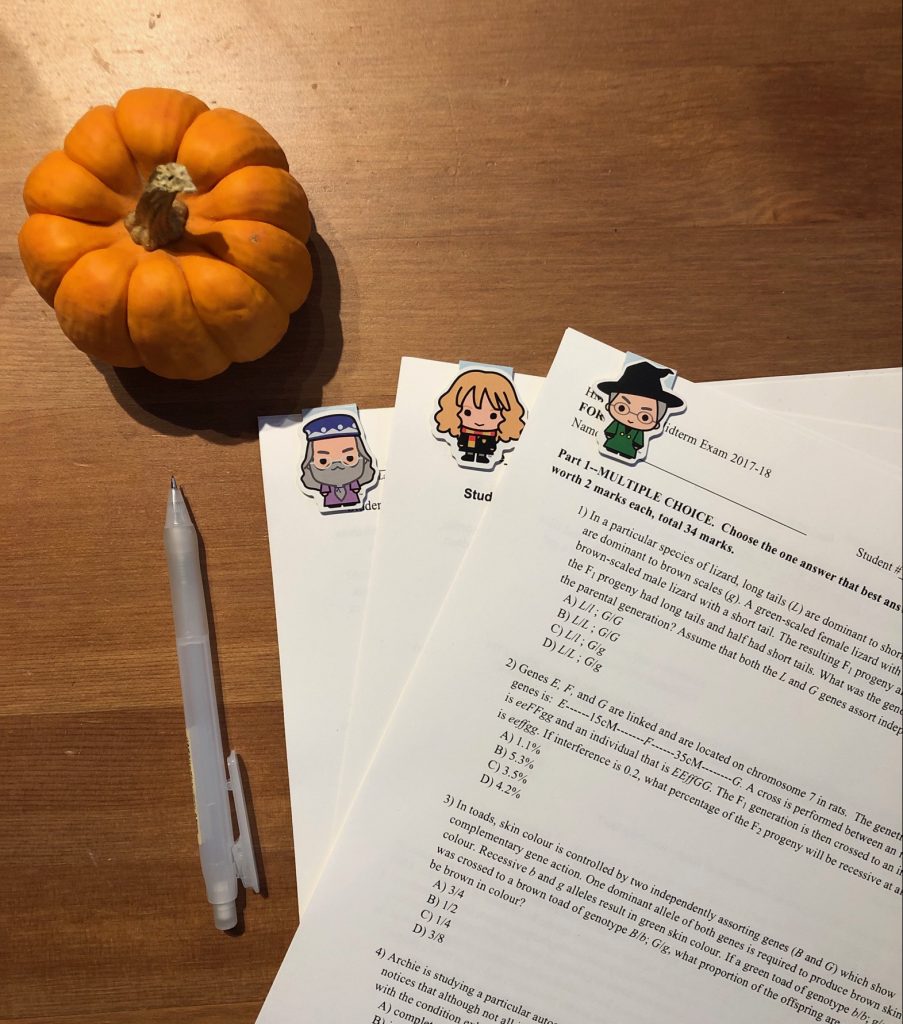
Yes, it makes me cringe every time I think about it.  For most of us, exams are the only thing standing between us and a much-needed school break.  And so we throw ourselves into powering through the last few weeks. The marked increase in people studying at Robarts is an indication of the incredible intensity of the exam period.

I find that in my own drive to get my exams done and over with, I fail to take as good care of myself, both mentally and physically, as I usually do.  A recent article in the Globe & Mail suggested that I’m not alone in ignoring my own health and wellness while trying to cope with the stress of end-of-term exams.

image

But wait, where does it say that I can’t give myself a little self-care AND get through all my exams and papers successfully?  Self-care and exams aren’t mutually exclusive.  And, it’s especially during these stressful times that I need to take a little time for myself.  I’m certainly not studying every single minute of every single day; therefore, self-care may not be as elusive as I initially assumed.

And yet, there isn’t always time to take an entire day off.  But there are always those little things that can help us get through the day.  Here’s a list of things that have worked for me over the years:

5. Reading something I want to read

When I’m tired of staring at a blank Word document or trying to sift through a 30-page reading, I set it aside and give my mind a mental break by picking up a leisure book or a magazine; just a short break, but just enough to allow me to regroup and refocus on the task at hand.


4. Drop-in classes at Hart House

I recently started going to a weekly drop-in fitness class at Hart House.  Although it’s a grueling workout that leaves my muscles feeling like jelly, the physical exercise is definitely a welcome change from sitting in a chair most of the day.


3. Taking a shower

Some of my best ideas come to me in the shower; I think it has something to do with the soothing feeling of the hot water and just letting my mind wander.  And, after a shower, both my mind and body feel alert and ready to tackle the next thing.


2. Talking to my parents

When I lived at home, our family’s tradition was to have dinner together every night.  It was a chance for us to just talk about anything and everything.  Although I’m currently living in residence I still talk to my parents regularly.  Their support is always a great mental booster.


1. Sleep

On Facebook, I’ve listed sleeping as one of my favourite hobbies.  Yet, when exams come around, I’m always tempted to ignore this very important aspect of my life.  Past experience, however, has taught me the value of getting a decent amount of sleep on a regular basis.  Sleep deprivation doesn’t help my brain perform the critical thinking and analysis needed to write my exams.  Now when I find myself feeling really sleepy, I listen to my body and head to bed.  That way, I can wake up in the morning refreshed and able to process things much quicker.

Studying for exams can be a harrowing time for many students and it certainly isn’t realistic to expect to be stress-free.  And, we all need a little stress to give us that edge to focus. But, the exam period doesn’t need to wreak havoc on our mental and physical health.

Most importantly, while I definitely know that every minute that goes by is a minute that can be spent studying, it’s important to not feel guilty about taking occasional breaks to regroup, refresh, and re-energize.  Even the energizer bunny’s batteries have to be changed every so often, so I figure we’re entitled to breaks to make sure that our bodies and minds are getting at least as much attention as our books.

Do you have something you do to inject a little self-care into your study schedule?

Happy (and I really mean this) studying!

Vivian

I’M GOING TO DISNEY WORLD…actually I should probably study instead.

When your eyeballs feel like they are about to dry up into prunes, and your legs are achy, and your wrists hurt, and you’ve finally finished that last paper of the term you should reward yourself. What do I do? Go to Disneyworld? No, I head to the local stationary store and purchase ten to twelve packs of index cards.

I’m serious. As my classmates bound joyfully out of these last lectures of the term, I wonder if they’ve forgotten that it ain’t over yet. While some of my friends possess the ability to deflate and distress after the last lecture of the term, I cannot. Not until the last period is dotted on the last essay of the last exam I write this term will I be able to relax.

When classes are finished, I start exam prep. I am militant about this process. I kind of scare myself sometimes. I have devised a method where all subjects can be studied via flashcards. I divide content into themes, timelines, places, etc. Whatever I think will help me to best write a frantic paper in 45 minutes.

I’ve never shared this information with anyone before…don’t tease me. It’s just how I effectively chunk course content. It might not work for everyone, but it’s the only way I study.

The process of making the flashcards is long and arduous.  Often times I find that by the time I’ve finished the process, I’ve already memorized a good portion of the content. For me, the process of rewording and condensing notes actually lodges the info into my memory. It’s not deliberate, it just happens. I can’t type the information out on one of those fancy flash card maker programs. I can’t remember anything I type.

I have not data to back up this claim, but I remember reading somewhere that the messier your writing is the easier it is to remember something you’ve read. I have horrible penmanship. It’s a hybrid of printing, cursive, and my own invented short hand. It is indecipherable by most others and often I have trouble figuring out what my notes say. When I force myself to go through all my messy notes and create these beautiful little flashcards in neat handwriting, some form of memorization takes place.

Once I have all my flashcards finished for a class, I start memorizing them, removing the ones I memorize as I go along. Usually within a few hours,  I can get through a stack of 100-150 cards. I do this for a few days leading up to the exam.  I only spend twenty minutes or so at a time going through the cards…so I don’t start to gap out!

There’s lots of different types of index cards out there! My enthusiasm about this matter depresses me in some way. Regardless, there are so many options. Last April I found spiral bound index cards. One word people, REVOUTIONARY! No more lost cards, no more cards out of sequence (this matters to me for studying).  My card of choice this exam period, the Cadillac of index cards, the spiral bound double sided lined…sweet.

Now when I walk into the exam venue and pull out my mountain of flashcards, most people look at me as if I am a deranged over achiever. Let me assure you I am not.

Here’s the thing: this method works for me. It’s a hellish process, but it gives me consistently good results.  Find your own method or try mine, I don’t mind. The point is that you need a plan. Mine is insane, but it’s mine. Yours might be reading through notes, rewriting notes, meeting in a study group. I think the worst thing you can do when preparing for an exam is nothing.

-Lori


Tech Trouble: Error Messages, Computer Crashes, and Corrupted Files

I had an assignment due last Friday that reminded me how horrible I am at solving tech troubles. My Word file wouldn’t open, my USB key wouldn’t mount, and my printer ran out of ink. I spent the night moving between my laptop and desktop computers, rewriting portions of my essay. By the time I completed, printed, and stapled my assignment, my hair was in disarray and my attitude was sour.

Let me just say that I don’t consider myself a particularly tech-savvy individual. I can do the basics, of course. E-mail, MS Office, and surfing the net aren’t an issue!  But I’m not very good at dealing with anything out of the ordinary. Unfortunately, that includes error messages, computer crashes, and corrupted files. And lately, I’ve been experiencing a lot more of all that than I would like.

I always seem to fight my battles with technology when I’m short on energy, patience and time. And while I’m sure that poor time management skills contribute to half of my technical woes, I’m convinced that computer trouble is an inevitable and undesirable part of our incredibly high-tech society. That being said, I figured I’d share a few tips to prevent tech troubles from rearing their ugly head.

ALWAYS unplug your USB key safely. You may have realized that most computers are constantly warning you about disconnecting flash drives without ejecting. While those reminders can be unbelievably annoying, they are in place for your own benefit! Yanking out a drive while your computer is performing complicated actions in the background could easily corrupt your files (trust me, I know). There’s no reason not to eject your drives, and doing so will keep your data uber-safe.

Use online storage (as well as a USB key) to back-up your files. Many students use USB keys to store and backup their personal files. The problem is that USB keys (and the files on them!) can be lost, damaged, or corrupted.  A great alternative to a USB drive is using online storage services to backup and share your files, photos, and music. You can even get some of these services, like Dropbox, for free so there’s absolutely nothing to lose!

Turn off your computer at night.  I’m extremely guilty of leaving my computer turned on throughout the night. But shutting it down has more advantages than leaving it on. Doing so will save energy costs, for one. On top of that, it’ll ensure that your computer systems aren’t unnecessarily overworked. And that’s good news for you and your files!

Use a reliable anti-virus program. Unfortunately, just because you don’t open suspicious attachments on your email messages doesn’t mean that your computer is fully immune to virus infections. To protect your data, install and update a dependable anti-virus and Firewall program (http://antivirus.utoronto.ca/). Doing so will prevent access to harmful websites and wave hackers off your computer, protecting your data from corruption.

Upgrade your systems! Following up on system updates is stress free, automatic, and completely free.

I’m sure we’ve all had computer or printer problems at some point in our academic careers. If you have any tips on preventing data loss, please share them! I can use all the help I can get!

Till next time,

Ishita

Let’s Catch Some ZZZZzzzzzzz’s

How many times has this happened to you? You’re spending an evening enjoying time with friends, surfing the Internet, or catching up on missed work. You tell yourself that you’ll watch one more episode of your favorite show or that you’ll cover one more chapter for that test on Friday, and the next thing you know, it’s 2 in the morning and you haven’t gotten into bed.

UofT doesn’t always make it easy to get the recommended 7-9 hours of sleep that we require. While you’re scrambling to meet the demands of your life, cutting back on sleep often seems like the only answer. Who can afford to waste hours a day sleeping? The truth is, you can’t afford not to.

As I’m sure we’ve all heard at some point or other, sleep is essential for our health and well-being. Even minimal amounts of sleep loss affect our mood, energy, and ability to handle stress. While it’s important to meet the deadlines that loom ominously in the near future, it’s essential to realize that missing sleep to do so is often counter-productive. As exam season approaches, be sure to remind yourself that the following “facts” about sleep are actually only myths:

Myths About Sleep (According to the American Psychological Association)

Myth 1: Getting 1 hour less sleep per night won’t affect your daytime functioning.

Low levels of sleep can affect our ability to think and respond to situations effectively, can compromise our cardiovascular health and immune system, and can reduce our working memory resources. I guess those extra minutes browsing 9gag aren’t always worth it! 

Myth 2: Your body will adjust quickly to different sleep schedules.

Resetting our biological clock takes work! It can take our body weeks to adjust to small deviations in our sleeping pattern. In fact, by the time our body has fully adjusted to a change in our sleep schedule, we’ll probably change our sleep schedule again! 

Myth 3: Extra sleep at night will cure you of daytime fatigue.

Quality, not quantity! If you’re sleeping 8-9 hours every night but feel restless and tired during the day, there’s a good chance that the quality of sleep you’re getting is poor. It’s important to spend enough time in the different stages of sleep, particularly REM sleep, as demonstrated above. Like our professors, our bodies do not respond well to poor quality!

So, is there anything we can do to feel well-rested? Of course we can (or we can at least attempt to)! Follow these simple tips, recommended by the American National Sleep Foundation, and your body will be happier than it’s ever been before:

Tip 1: Aim for at least 7 hours per night. Although some of us need more sleep than others, 7 hours is a minimum. Consistency is key!

Tip 2: Try not to accumulate sleep debt! If you lose sleep, make it up in 1-2 hour installments over the week. The amount of sleep you need and the amount of sleep you get should balance!

Tip 3: Make sleep a priority! Schedule time for sleep! Sound silly? You schedule time for work and play because they are important to you. It’s important to put sleep at the top of your to-do list too! Improve the quality of your sleep by reading a book before bedtime, cutting back on caffeine, and exercising. You’ll be happier and healthier.

For more information on sleep, visit http://healthandwellness.utoronto.ca/pdfs/BetterHealth-A.htm

Till next week,

Ishita

P.S. How ironic is it that I wrote this post at 3 AM in the morning? I promise I’ll follow my own advice from now on!

you’re almost there!

Referring to the title:  http://www.youtube.com/watch?v=Hhi43zV91F0

So, we’re about a month away from the end of the semester. Are you excited? I bet under those tired eyes, pyjama pants and bath robe lies a student who is jumping for joy at the possibility of going home and celebrating the holidays with friends and family under a background of a fresh winter’s snowfall (I hope, global warming go away).  However, there is still a month left of classes and about two weeks’ worth of exams left.  But, we won’t panic.

At this point, we have all seen our first set of midterms – some of us may be really impressed with the way we did. To those people, I say congratulations – you worked hard and you got your marks, so yolo and stuff. More likely, most of us got a mix of good and bad results.  It’s like a box of Raisin Bran – you have the desirable raisins and then you have the bran.  I’m probably in this Raisin Bran category. But don’t worry, it doesn’t take much to turn your marks from a box of Raisin Bran to a box Frosted Flakes (so good)! (This post does not endorse any Kellogg’s cereal, or General Mills cereal for that matter. Obesity is a serious problem, so lay off on them Frosted Flakes.  If a cereal company, however, wishes to market cereal boxes with my face on it, this can be arranged).  So this post is for me, but it’s also for you.

How am I to go about making a box of Raisin Bran into a box of Frosted Flakes before the holiday break, so that I can watch Charlie Brown specials in peace?  Let’s make a plan.

1)       I’m going to start fresh. What happened in the past is history, it’s time to brush the dust off your shoulders and move on. Treat it like the beginning of the school year

2)      I have to make sure that I keep organized.  Have all my exam, essay and remaining midterm dates written down so I can effectively prepare. Also, I’m going to prepare a schedule for each day to minimize last minute cramming, and then report back at the end of the day how much I accomplished.  Also, keeping my desk neat and binders clean, that kind of stuff.

3)      Keeping motivated.  Keeping an eye on the goal, reminding myself of the holidays, getting support from family and friends and listening to that you-go-girl Demi Lovato music.

4)      Keeping it positive.  As my psychology professors have drilled into my head, attention is everything.  What we choose to focus on will affect our outlook and attitude, so I’m gonna focus on the positive and not the negative.

5)      Minding the caffeine and sugar.  While they do give me a boost of energy, they also make me sluggish.  And sluggish is bad.

6)      Relaxing now and then and scheduling my breaks so I don’t take too many of them.

The box of Raisin Bran is now magically a box of Frosted Flakes.  You’re almost there, keep on truckin’ U of T. :)

- Abdullah

Why cookies are so important

Cookies are a staple of my diet. I eat at least one per day. If I ever awoke one day to a chocolate chip shortage, I really don’t how I would deal. Cookies are not just yummy snacks for me, they represent far more.

When I am super stressed about exams or unfinished papers that are days away from being due I bake cookies. When I’m bored, which is not very often, I bake cookies. When I know a fiend of mine is feeling down, I bake cookies. When I found out that I wasn’t getting any OSAP funding this year, I baked some cookies.

I don’t know when or how it started, but cookies have become my escape.

I am not picky about cookies. Although I profusely enjoy my cookies, I have no problem eating those not baked by my keyboard callused hands. Once a week I meet up with a friend of mine at the Wymilwood Café at Vic and we eat cookies. Their cookies are magnificent specimens…not to crunchy and with the perfect proportion of dough to chip.

I look forward to this midweek ritual more and more as we get deeper into the term. Their is a proportional relationship between my craving for cookies and the number of papers I have due at any given time. During summer break I rarely crave or eat cookies, but as soon as the term started so too did the old habit.

Now I’m sure some of you  might be worried about my diet and love of cookies. It would be ideal if I craved carrots during these stressful times, but the heart wants what the heart wants.

I’m in the thick of it right now, as I sit on my bed buried in a pile of peer-reviewed journal article print outs. Sometimes, it feels as though it will never end. Yet, when I think about my upcoming cookie date I know that I’ll get through the next few days.

I think it is so important to take a few minutes to indulge yourself and enjoy the little things in life. Meet a friend for a coffee or a cookie, laugh,  vent about how stressed you are, and laugh some more. It’s a rejuvenating exercise!

This term will be over before you know it and I know that I’ll look back and say “wow, that flew by!” even though right now the end seems so very far away.


-Lori